Blisters
Blisters On Flat Roofs
Trapped moisture lifts plies into soft bubbles, and freezing water splits them open over the winter.
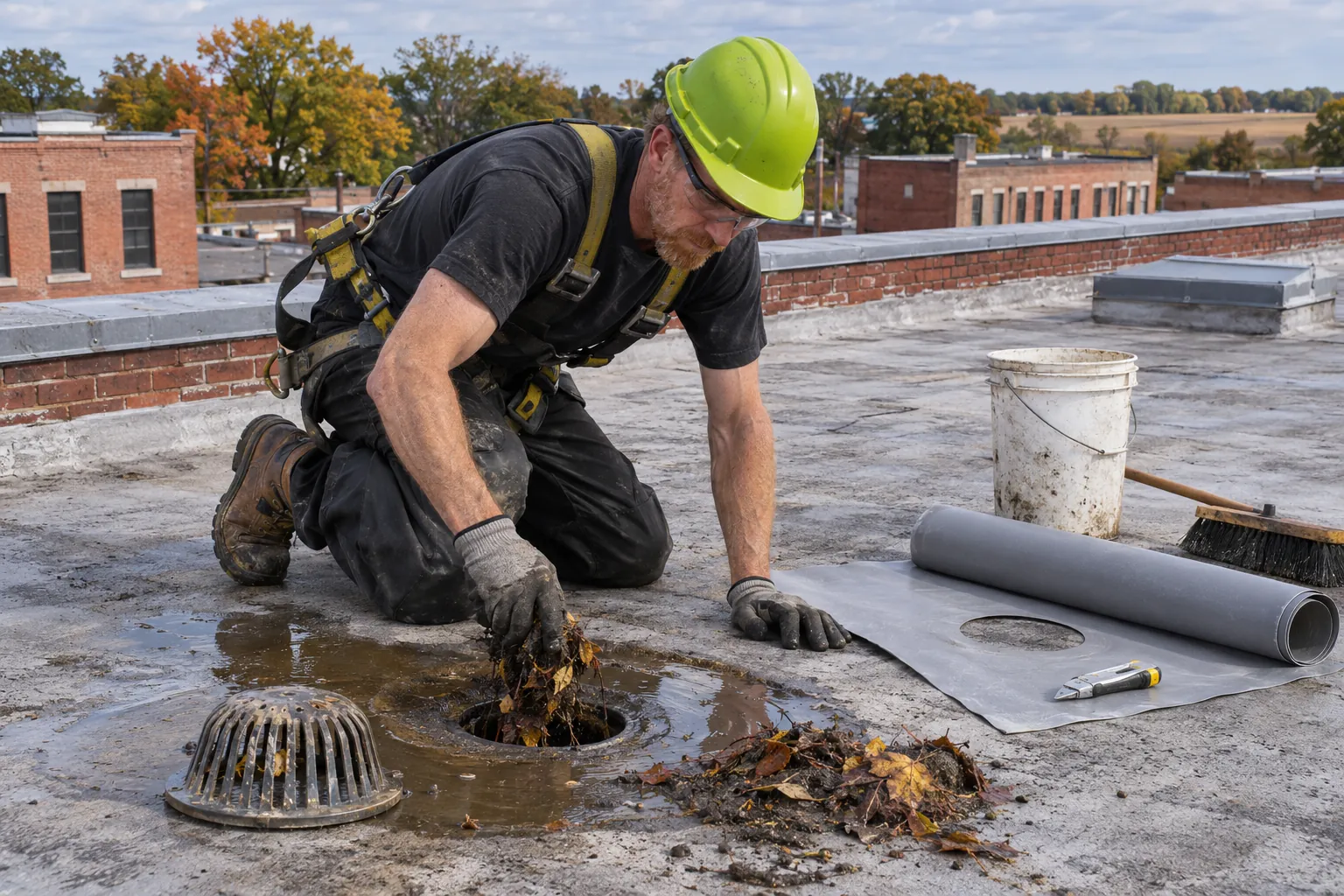
As a Gas City commercial roof repair contractor, we repair flat roof seams, metal roof screws, flashing, and drains in the fall, before freeze-thaw widens every crack.
Gas City commercial roof repair pays off most in fall, when small cracks are still small and the weather still lets sealants cure.
Water gets into small cracks, seams, and screw holes, freezes, swells, and opens them wider. That repeats all winter, so a hairline split in October becomes a leak by March. Fall repairs close those openings while the roof is dry and warm enough to work on.
Drains get cleared at the same time, so snowmelt has a way off the roof, and wall flashing gets refastened before drifts pile against the parapets.
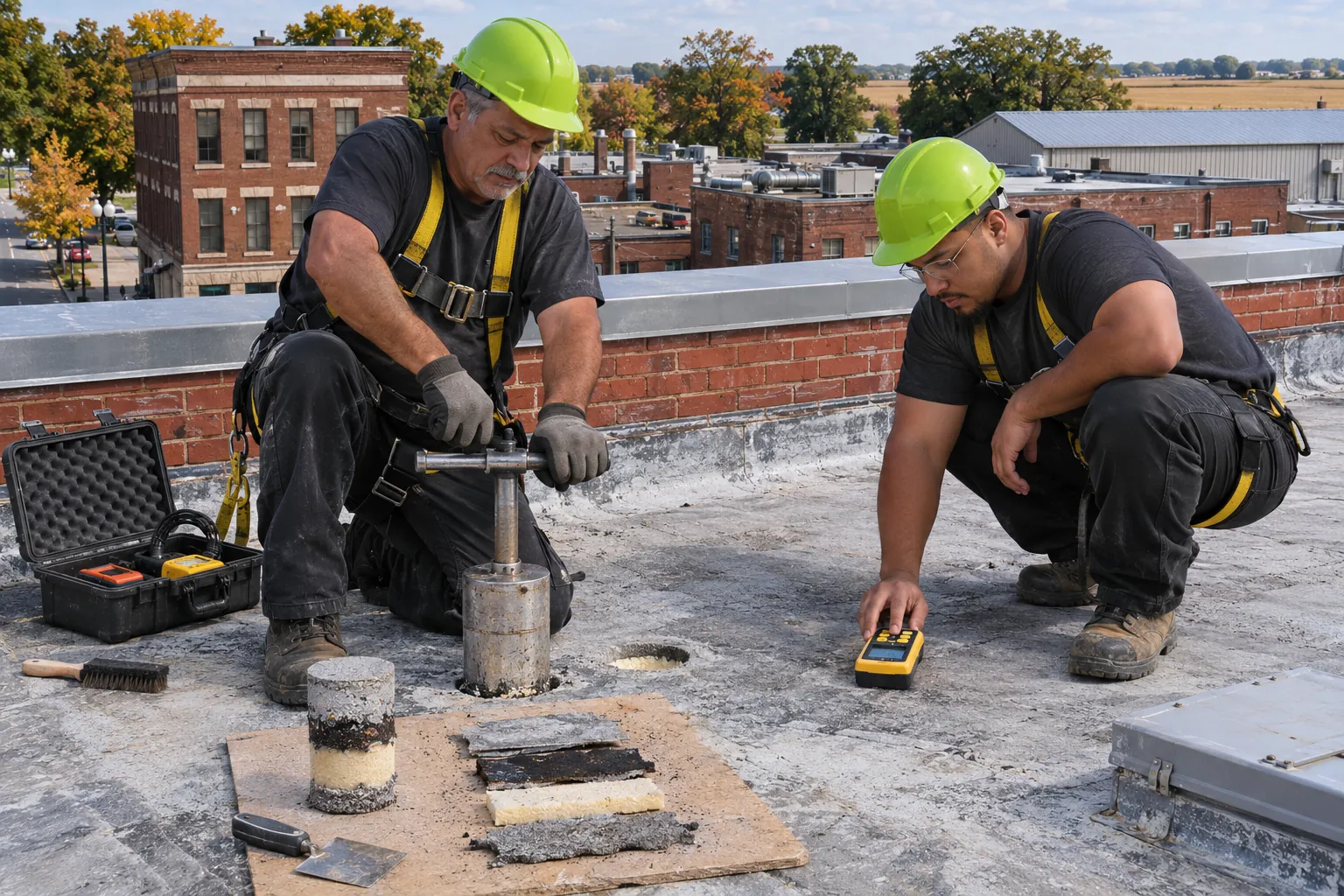
Winter turns these small problems into leaks.
Trapped moisture lifts plies into soft bubbles, and freezing water splits them open over the winter.
Water sitting at low spots works into lap seams, and each freeze pries the seam a little wider.
Cracked washers let water into screw holes, where it freezes and stretches the hole until the screw loosens.
Drains slowed by leaves leave water on the roof that freezes into ice right where melt needs to run off.
Cold shrinks old flashing, and it pulls away from parapet walls just as snow piles against them.
Fall repairs mean fewer winter calls and drier spring floors.
Fixing small openings in fall keeps them from growing into winter leaks.
Clear drains and closed seams let melt leave the roof instead of soaking in.
Sealed seams and screws keep water out of insulation through months of freeze and thaw.
Fall repairs for flat and metal roofs.
Broken blisters get cut open, dried, and patched with layers that match the roof.
Opened laps get cleaned and welded on TPO, or primed and taped on EPDM.
Loose screws get replaced a size up with new washers, and laps get fresh sealant.
Strainers get cleared and loose clamping rings tightened so snowmelt runs off.
Shrunken flashing at parapet walls gets refastened or replaced before snow drifts sit against it.
Call with the address. A temporary seal goes on first if it is wet.
Call UsSend the address. We walk it and fix the small stuff first.
Get A Free EstimateFive decisions on the way to a roof ready for winter.
Seams, blisters, screw lines, flashing, and drains get walked in fall while the roof is dry, with every small crack marked before winter.
Hairline splits, lifted laps, and cracked washers get priority, since freeze-thaw turns exactly those into leaks by spring.
Blisters get cut out and patched, seams welded or taped, screws replaced a size up, and laps resealed.
Drains get cleared and reset, and low spots near them get noted, so snowmelt leaves the roof.
The record lists every repair and the spots to check after the first big thaw.
A spring walk after the last freeze confirms the fall repairs held, checks drains for winter debris, and finds any seam or screw the cold opened.
We take commercial roof repair work in Gas City, Muncie, and four other towns. Outside them? Call us or send us a message.
Winter, cost, and timing.
Seam and blister repairs on flat roofs, screw and lap repairs on metal roofs, flashing at walls and rooftop units, and drain work where ponding has built up. Freeze-thaw and snowmelt make all of them worse, so fall is the time to schedule.
That depends on how many seams, screws, or drains need work and whether insulation is wet. Small fall repairs cost less than the winter leaks they prevent. The free estimate measures each spot and puts the price in writing.
Yes. Gas City is in our regular area, and winter leaks get a temporary seal on a cleared surface, then the permanent repair when conditions allow.
Early to mid fall, while days are dry and warm enough for sealants and adhesives to cure, and before freezing nights start working water into cracks.
New ceiling stains, water standing near drains, and ice left at eaves or gutters. Any of those points to an opening worth tracing before spring rain.
Cold shrinks old flashing, and fasteners at the top edge loosen, so the flashing pulls away from parapet walls just as snow drifts pile against them. Refastening or replacing it in fall keeps melt from running behind it.
Keep staff off the icy roof. Clear drains in fall so melt has a way off, and if ice builds up anyway, call; water backed up behind it is the most common winter leak.
A quick spring walk is worth it. It confirms fall repairs held through the freeze and finds any new openings the winter made before spring storms arrive.
Small, firm blisters can be watched. Broken, soft, or growing ones get cut out, dried, and patched before winter, since water in them freezes and splits the plies.
Tell us the building and what you saw last winter. We close the small openings before the next freeze.