One Traceable Leak
- Inside
- One stain or drip line
- On The Roof
- A seam, curb, drain, or screw above it
- Timing
- Shows up in hard rain or snowmelt
- Insulation
- Wet only near the opening
- Where We Start
- Trace uphill from the stain

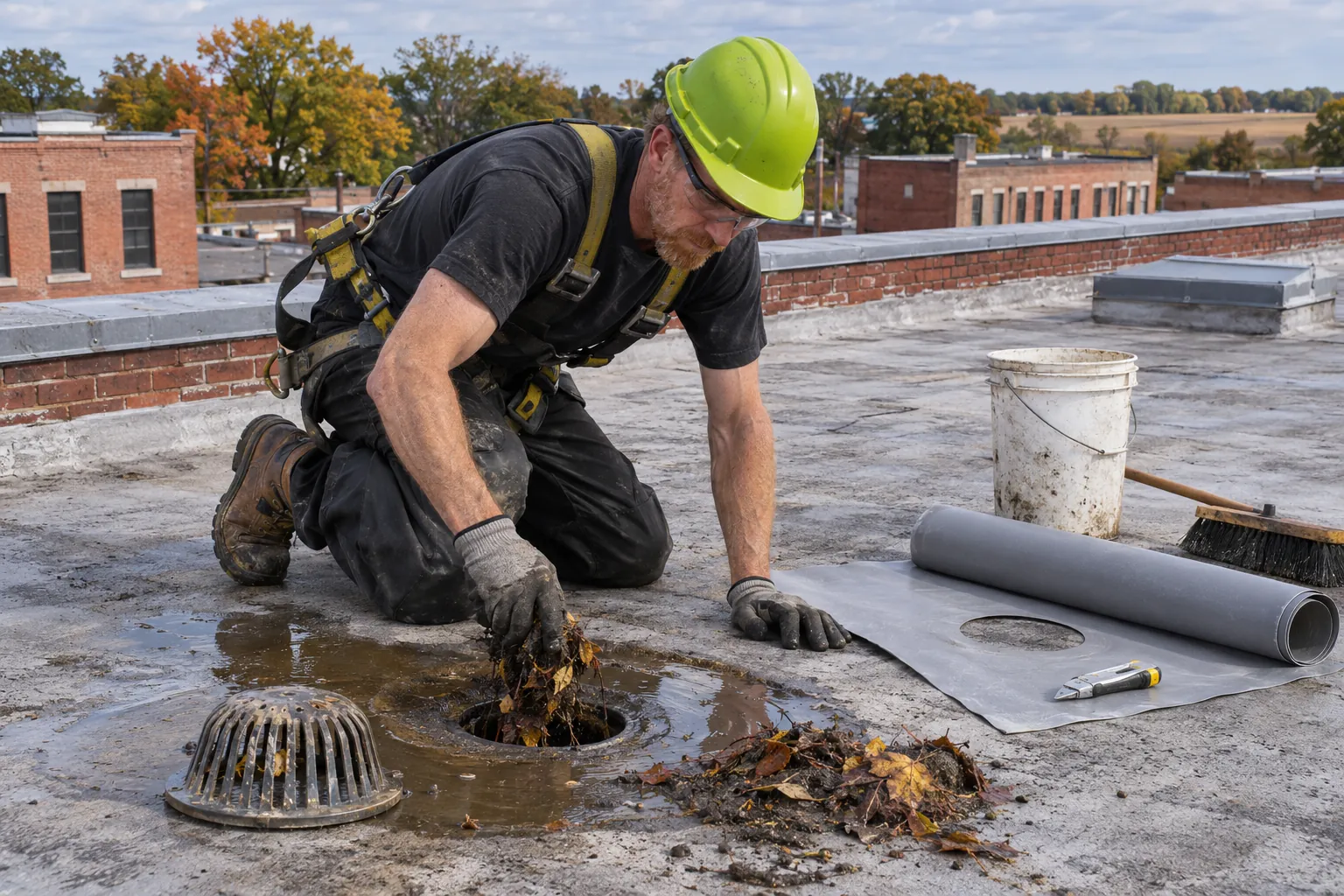
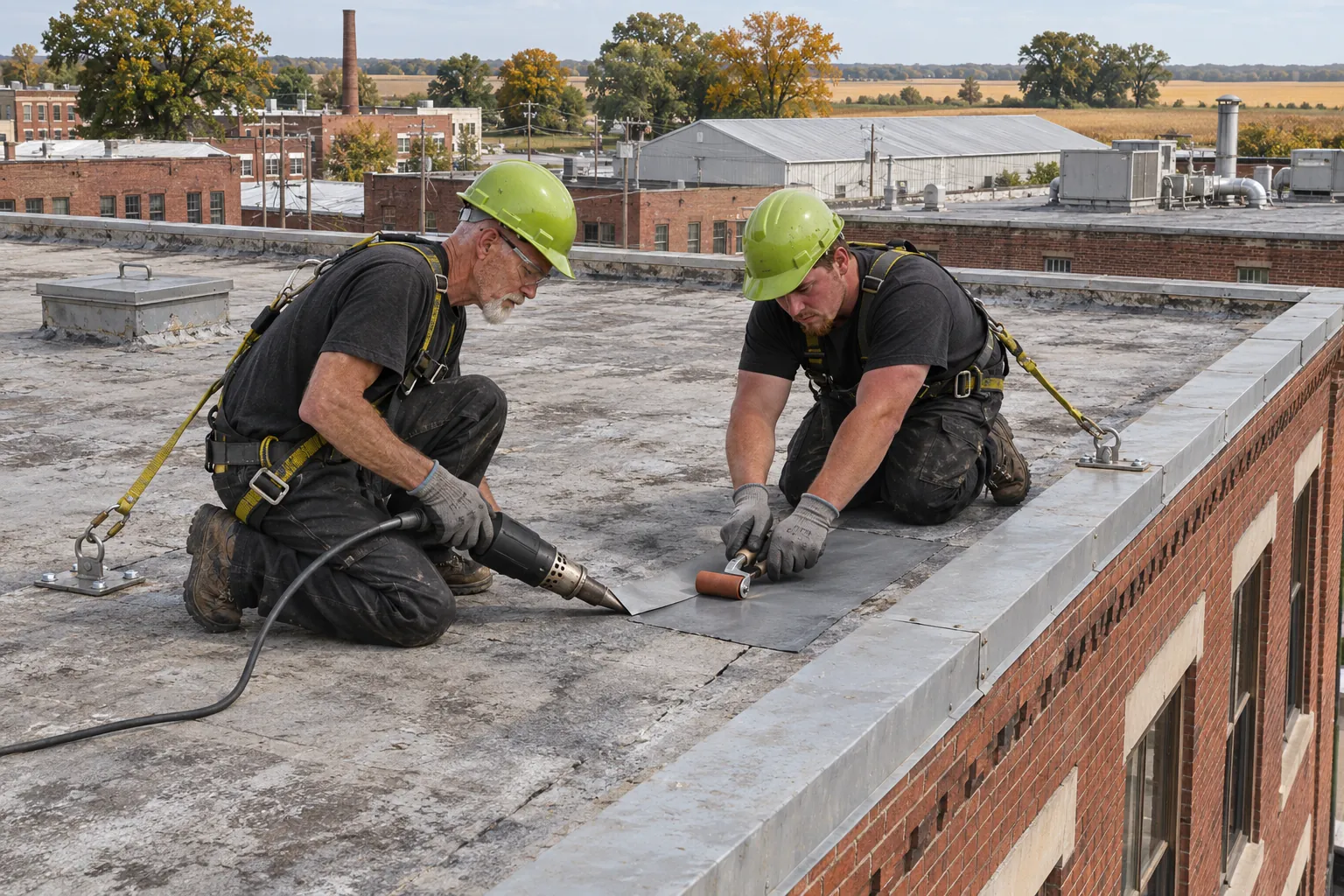
As a Muncie commercial roof leak repair contractor, we trace each drip from the stain inside to the opening on the roof, then repair that seam, curb, drain, or screw.
Muncie commercial roof leak repair works when the water has one entry point. Compare that with leaks that are really a whole-roof problem.


Where the water usually gets in, even when the stain is somewhere else.
Snow melts over warm spots, refreezes at cold eaves and drains, and the meltwater backs up under laps and flashing behind the ice.
A sound roof stays dry in a downpour. Leaks that show up only in hard rain point to blocked drains, low flashing, or a seam where water collects.
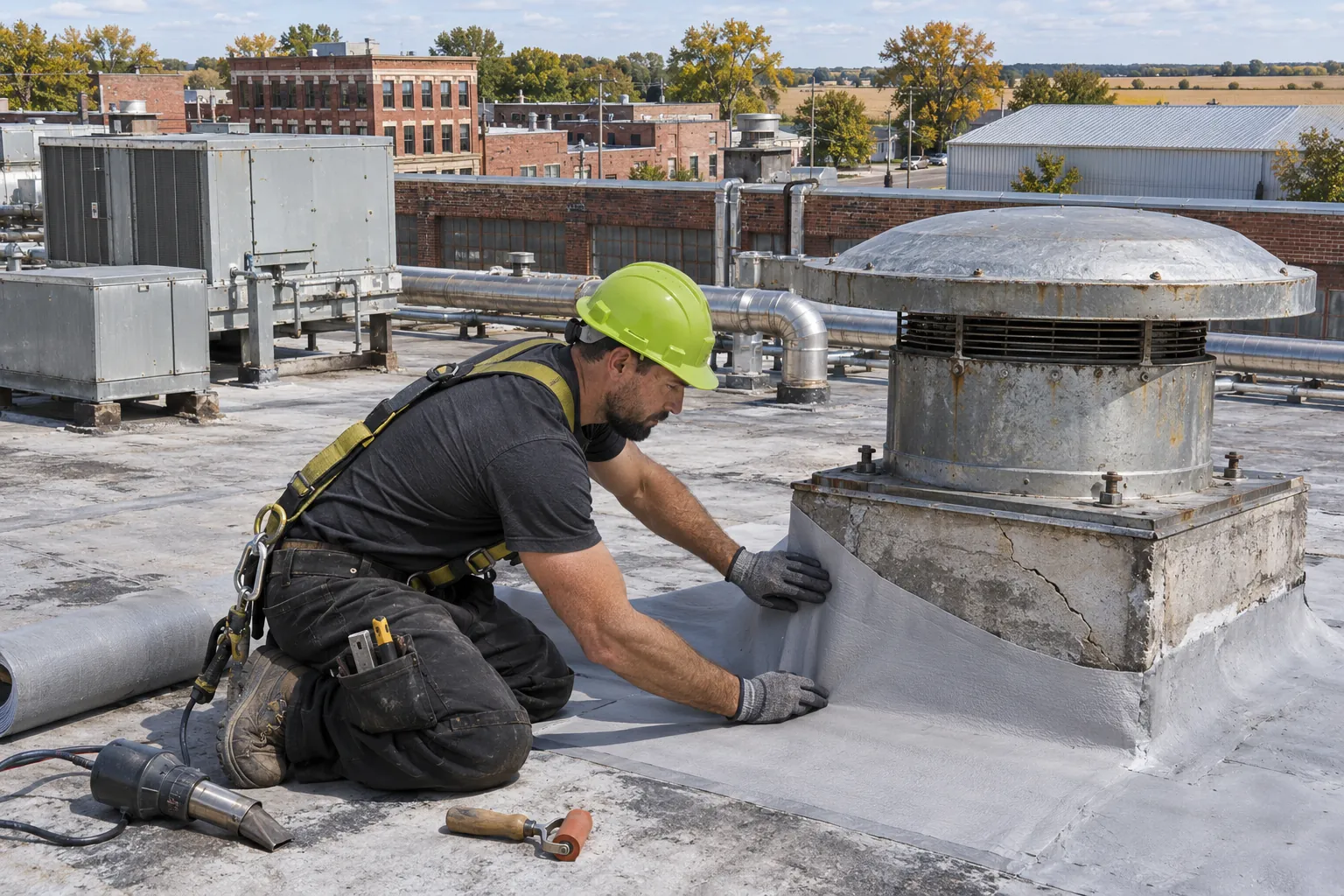
Cracked curb flashing, loose curb caps, failed sealant at the unit base, or condensate dripping onto the roof all send water down beside the duct.
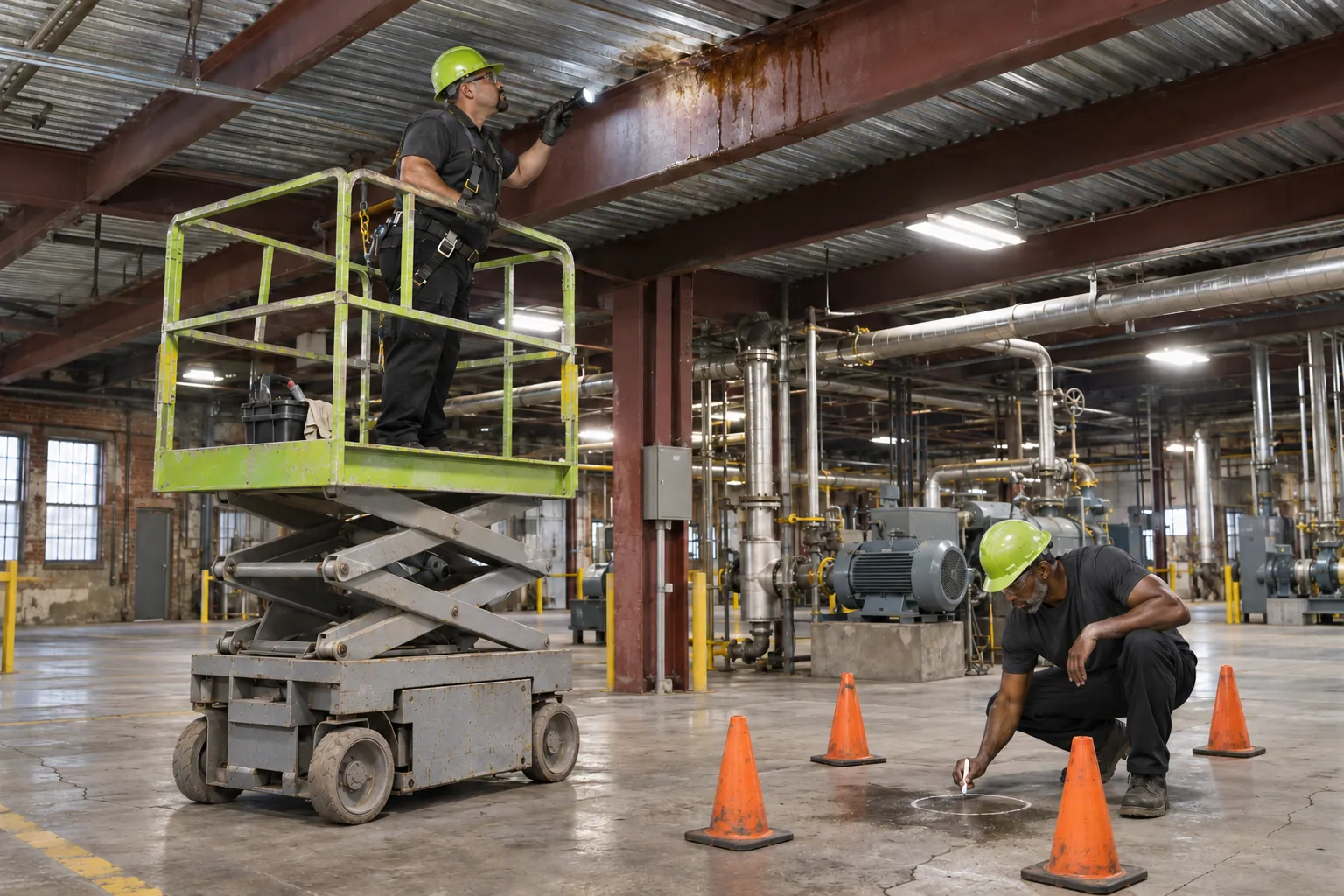
High ceilings let water run along purlins and insulation before it drips, so the opening can sit several feet uphill from the puddle.
Once the opening is found, the repair matches what failed.
Cracked flashing gets replaced and brought high enough above the roof, and condensate lines get routed to a drain.
Clamping rings get tightened or replaced and the membrane gets resealed to the flange so water goes down the pipe.
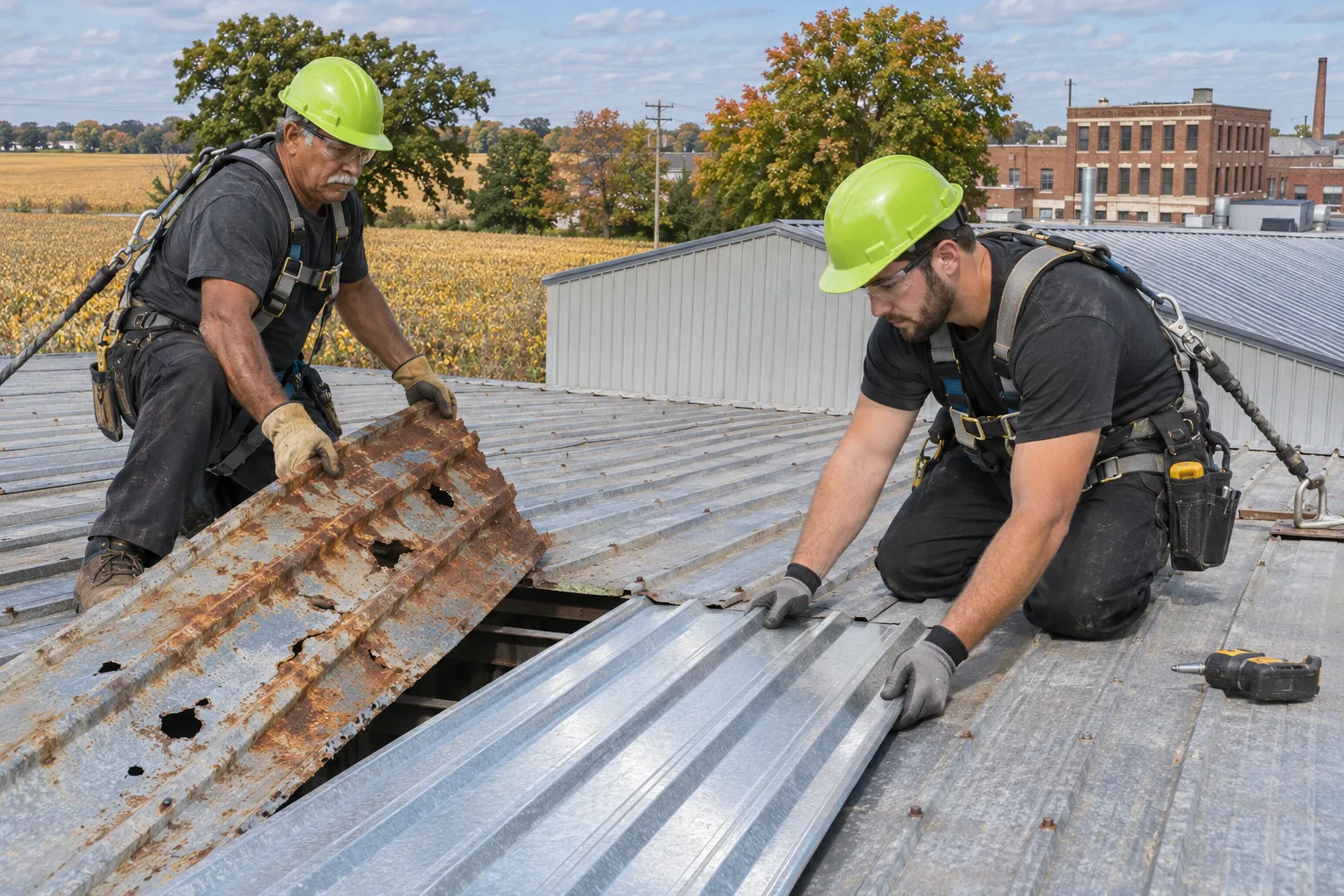
Membrane laps get welded or taped, and metal laps get new sealant and stitch screws.
Laps and flashing at cold edges get sealed, drainage gets cleared, and uneven melting from heat loss gets pointed out to the owner.
Leaks cost the most where stock, equipment, or patients sit below.
Tracing uphill from the stain puts the fix where water enters, which is rarely right under the drip.
Sealing the entry points ice dams use, and clearing the drains they block, ends the same leak every thaw.
Owners learn which seam, curb, or screw caused each stain, so repeat spots are easy to spot later.
Call, then move stock and set out containers. A temporary seal holds until the permanent fix.
Call UsSend the address and where the stain is. We trace it and write the repair.
Get A Free EstimateFive decisions that move from the stain to the opening.
Inside first: drips and stains get marked on the deck. Then on the roof above, we work uphill checking seams, screws, flashing, curbs, and drains in the water path.
One stain with one opening above it is a leak repair. Stains across many bays and wet insulation everywhere call for a moisture survey of the whole roof.
Unit curbs, drain flanges, opened laps, and backed-out screws cause most leaks. Ice dams add cold eaves and gutters in winter.
Curb flashing gets raised and resealed, drains get reset, laps get welded or taped, and screws get replaced a size up with new washers.
Photos of the opening and the repair go to the owner, and the next hard rain is the test; a return call goes to the same spot first.
Once the opening is found, the fix may fall under one of these services.

Membrane seams, drains, and ponding on low-slope roofs.
Best For
Screws, end laps, and rusted panels on steel roofs.
Best For
Plant roofs with fans, stacks, and pipe supports.
Best ForTracing, ice dams, rooftop units, and price.
Warm spots melt snow, and the water refreezes at colder eaves, gutters, and drains. The ice holds back more meltwater, which runs under laps and flashing. Repairs seal those entry points, clear the drainage path, and flag the heat loss causing uneven melting.
No. A roof in good shape stays dry in a downpour. A heavy-rain leak usually means a blocked drain, flashing set too low, or a failed seam or screw where water gathers, and those leaks grow, so trace them early.
Mark the drip and the stain on the deck, then go up and work uphill from that spot checking every seam, screw, curb, and drain. Water often travels along purlins or insulation first, so the opening can sit well away from the puddle.
Cracked curb flashing gets replaced or resealed and raised high enough above the roof, loose curb caps get refastened, and condensate lines get routed so water stops pooling against the curb.
The cause, how much roof around it is damaged, whether insulation is wet, and how hard the spot is to reach. One loose screw costs far less than a failed drain or a long opened seam. The free estimate sets the price once the opening is found.
Water in a crack or screw hole freezes, swells, and widens the gap; the thaw lets more water in. That repeats all winter, so small defects become spring leaks. Sealing seams, flashing, and screws in fall keeps water out of them.
Tell us where the stain or drip is and when it shows up. We trace it to the opening and repair that spot.