Patch Or Section Repair
- Damage Area
- A few seams, a drain, or one low spot
- Insulation
- Dry around the problem
- Membrane
- Still flexible when folded
- Leak Pattern
- One or two spots, often near drains
- Where We Start
- Clean, prime, weld or adhere new membrane
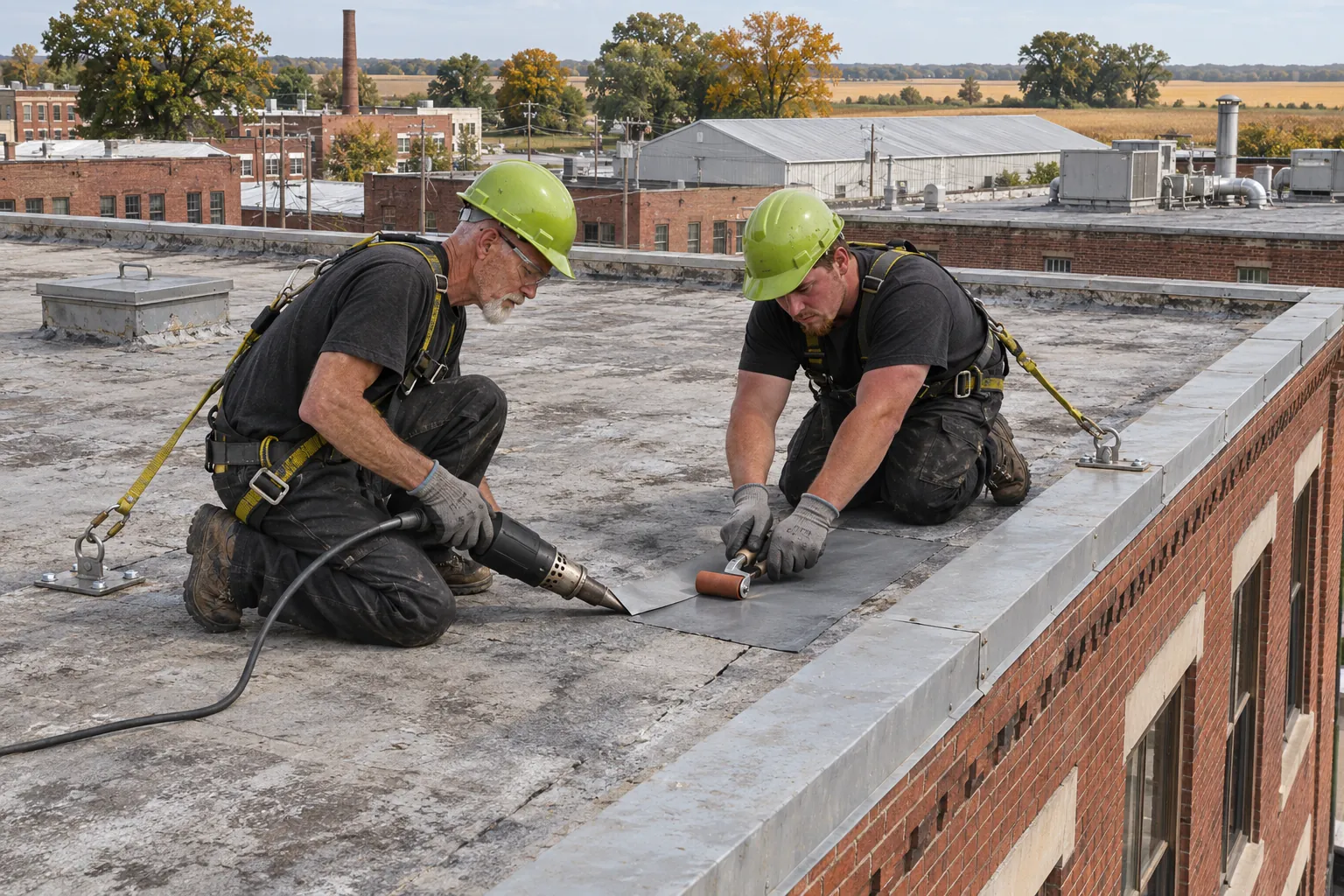
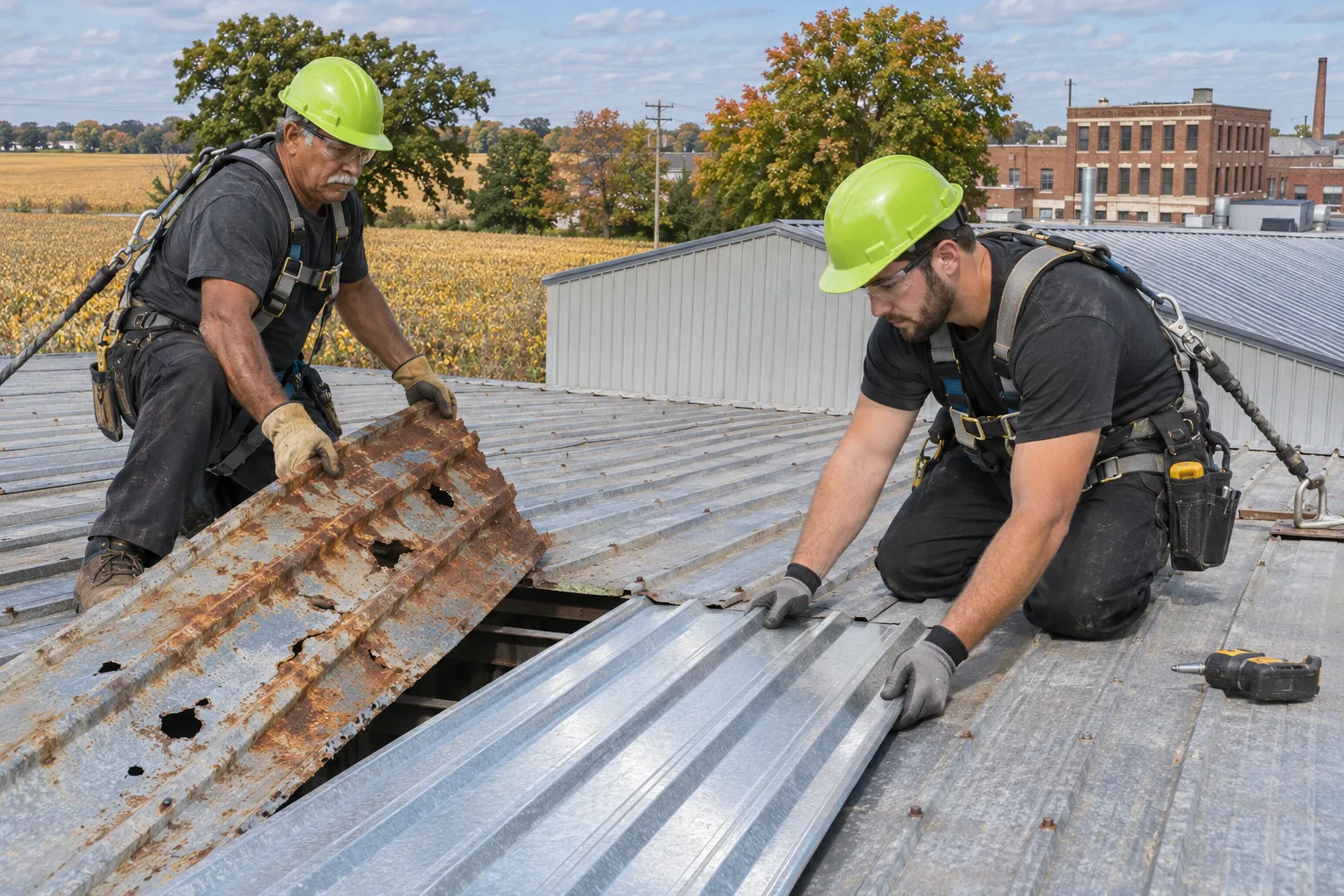
As a Muncie flat roof repair contractor, we weld and patch membrane seams, reset drains, and fix low spots on TPO, EPDM, and built-up business roofs.
Muncie flat roof repair fits most low-slope roofs where the damage is local. Here is how a patch job compares with a roof that needs more.


Water sits longer on a low slope, so these are the spots that fail first.
Puddles still there two days after rain mark a sagging deck, crushed insulation, or a drain set too high. Tapered insulation or a cricket moves the water to the drain.
Heat, cold, and foot traffic work membrane laps loose. On TPO the lap gets rewelded; on EPDM it gets cleaned, primed, and covered with seam tape.
A loose clamping ring or membrane pulled back from the flange lets water slip under the roof right where it collects most.
Trapped moisture heats up and lifts plies into soft blisters. Broken ones get cut out, dried, and patched with matching layers.
Flashing that stops too close to the roof surface lets heavy rain and snowmelt climb over it and run down inside the wall.
The method follows the membrane and what is under it.
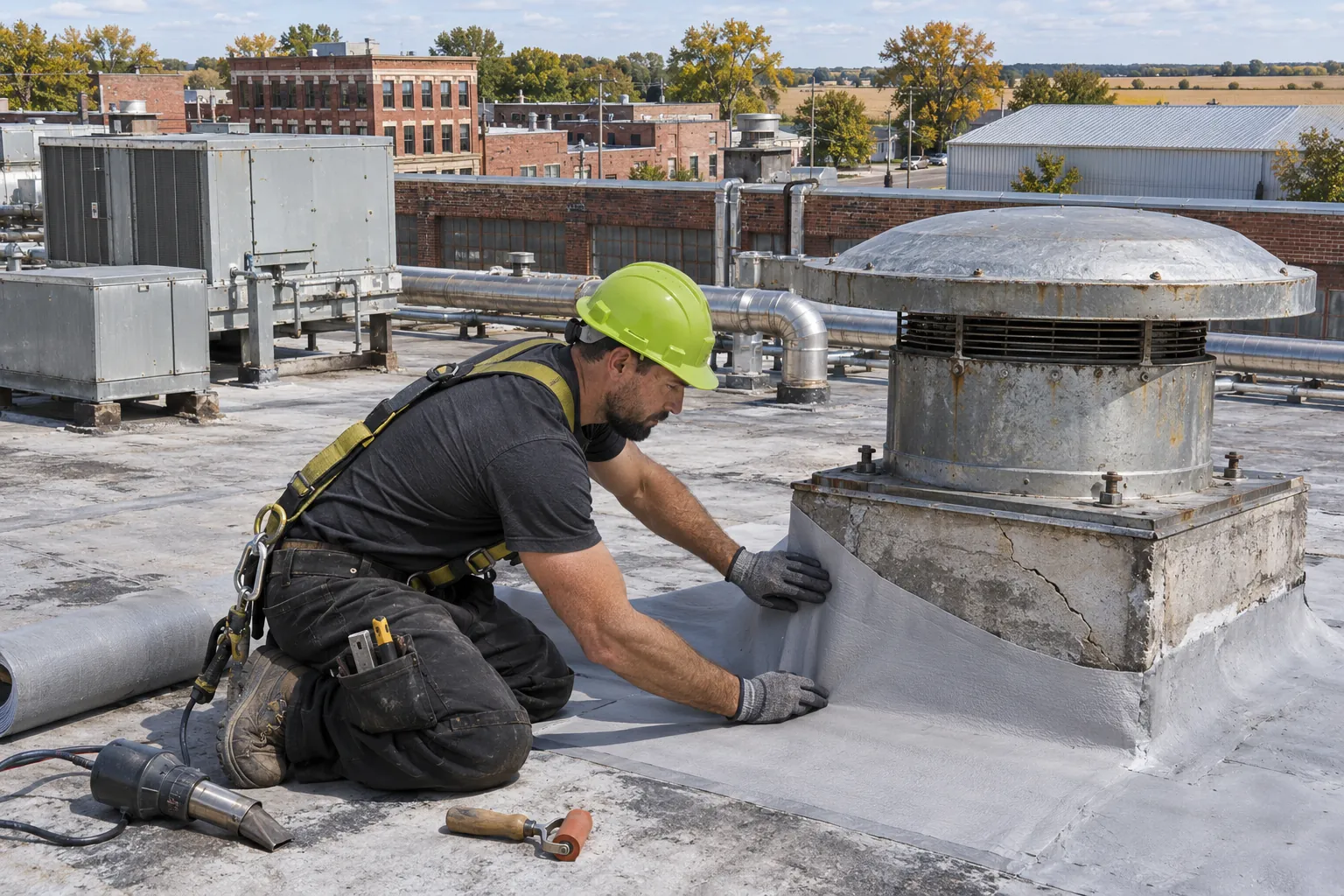
Weathered membrane gets cleaned until it welds, then a new piece is heat-welded on and probed along every edge for gaps.
Rubber roofs take a primer, seam tape, and a cover strip rolled down hard, since EPDM cannot be welded.
Damaged plies come out to dry felt, new layers go down in the same order, and the edges get sealed.
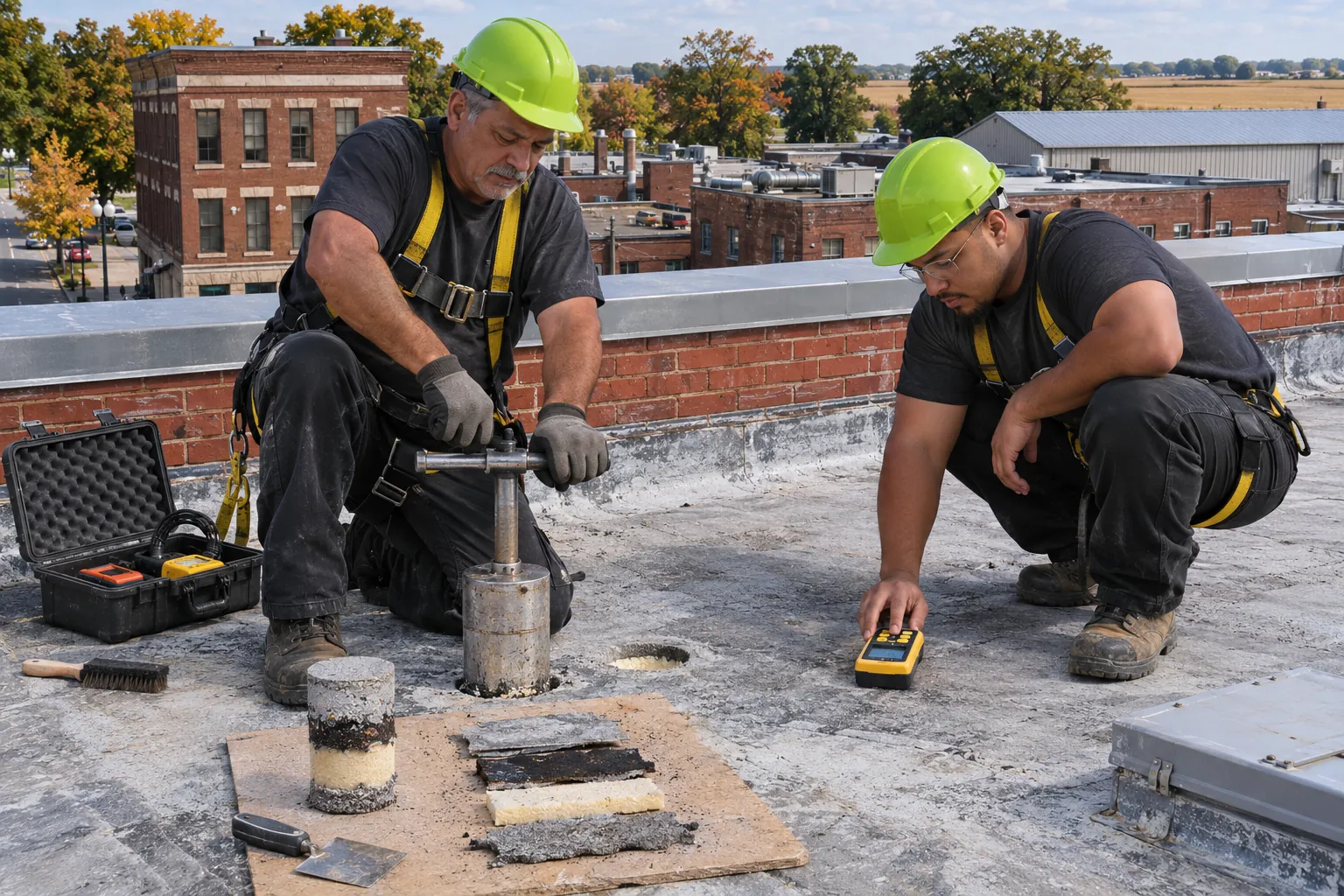
Meter readings around the problem decide it. Dry insulation keeps it a patch; wet insulation spreading past the spot means a section rebuild or a replacement talk.
Low-slope roofs cover most commercial buildings here, from clinics to warehouses.
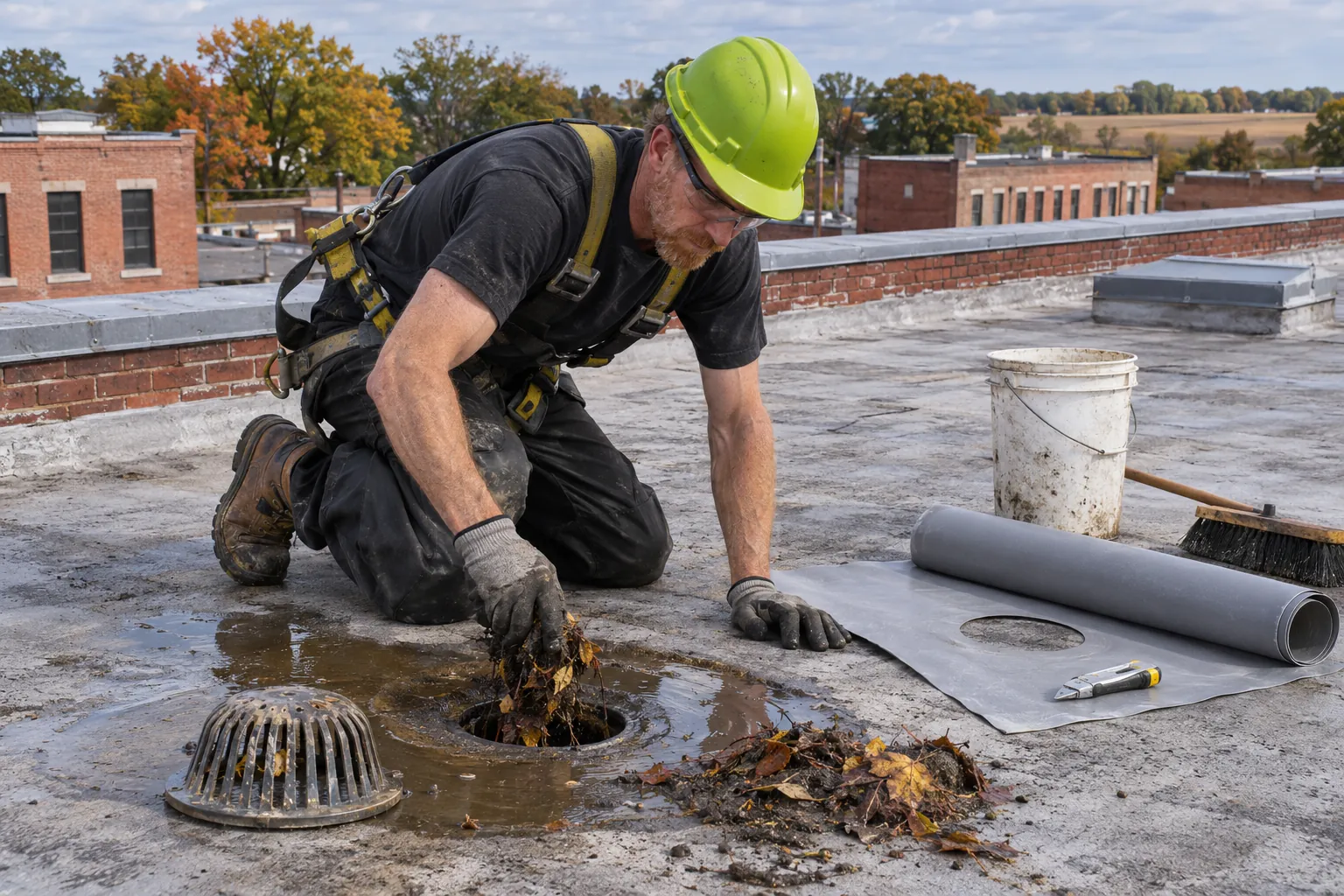
Clearing and resetting drains first takes weight off the deck and stops ponds from soaking seams.
Welding TPO to TPO and taping EPDM to EPDM keeps the patch moving with the roof instead of pulling away.
Snow and ice get cleared off the work area, so a leak in January gets sealed rather than waiting for spring.
Call with the address. Wet membranes get a temporary seal until a dry day allows welding.
Call UsSend the address and roof type. We read the moisture, then write the repair.
Get A Free EstimateFive decisions from the first walk to the record.
Drains and overflow scuppers come first, then seams near low spots and flashing heights at walls and curbs. Each soft spot underfoot gets marked for a moisture reading.
Meter readings around each problem, and a core cut where they run high, show whether the insulation below is dry enough for a patch or wet enough to replace.
TPO and PVC get hot-air welded patches, EPDM gets primer and seam tape, and built-up roofs get cut-out patches laid in the same ply order.
Low spots get tapered insulation or a cricket, and drains get reset so the repaired area sheds water instead of holding it against new seams.
Dated photos of every patch and drain, the products used, and notes on seams to watch go into the record for the next roof walk.
When the problem is steel panels, a hidden drip, or a plant roof, these services take over.

Screws, end laps, and rusted panels on steel roofs.
Best For
Drips with no obvious cause, traced to the opening.
Best For
Plant roofs with fans, stacks, and pipe supports.
Best ForAnswers written for low-slope membrane roofs.
It does once the work area is shoveled, de-iced, and dried. Several adhesives and sealants have temperature limits, so cold days call for cold-rated products, or a temporary repair now and the permanent one on a warmer day. A winter leak still gets stopped right away.
Hard rain raises the water level on the roof until it reaches a weak point: flashing set too low, an opened lap near a drain, or a clogged scupper that lets water back up. We check the drains and overflow path first, then the flashing heights.
Opening or adding drainage, building low areas back up with tapered insulation or a cricket, and fixing deck that has sagged. Patching only the membrane over a pond leaves the water in place, and frozen ponds add weight and pry seams open all winter.
Moisture readings around the damage tell us. Dry insulation and flexible membrane around the spot mean a patch will hold. Brittle membrane, seams failing in many places, or wet insulation across big areas mean the roof is near the end of its life.
Look for punctures or hail marks, loose edge metal, leaves packed into drains, and new ceiling stains. Wind also lifts membrane edges at the perimeter. A roof walk soon after the storm finds damage before the next rain, and dated photos help with an insurance claim.
Tell us about the seam, drain, or pond and where water lands inside. We read the moisture and write the fix.