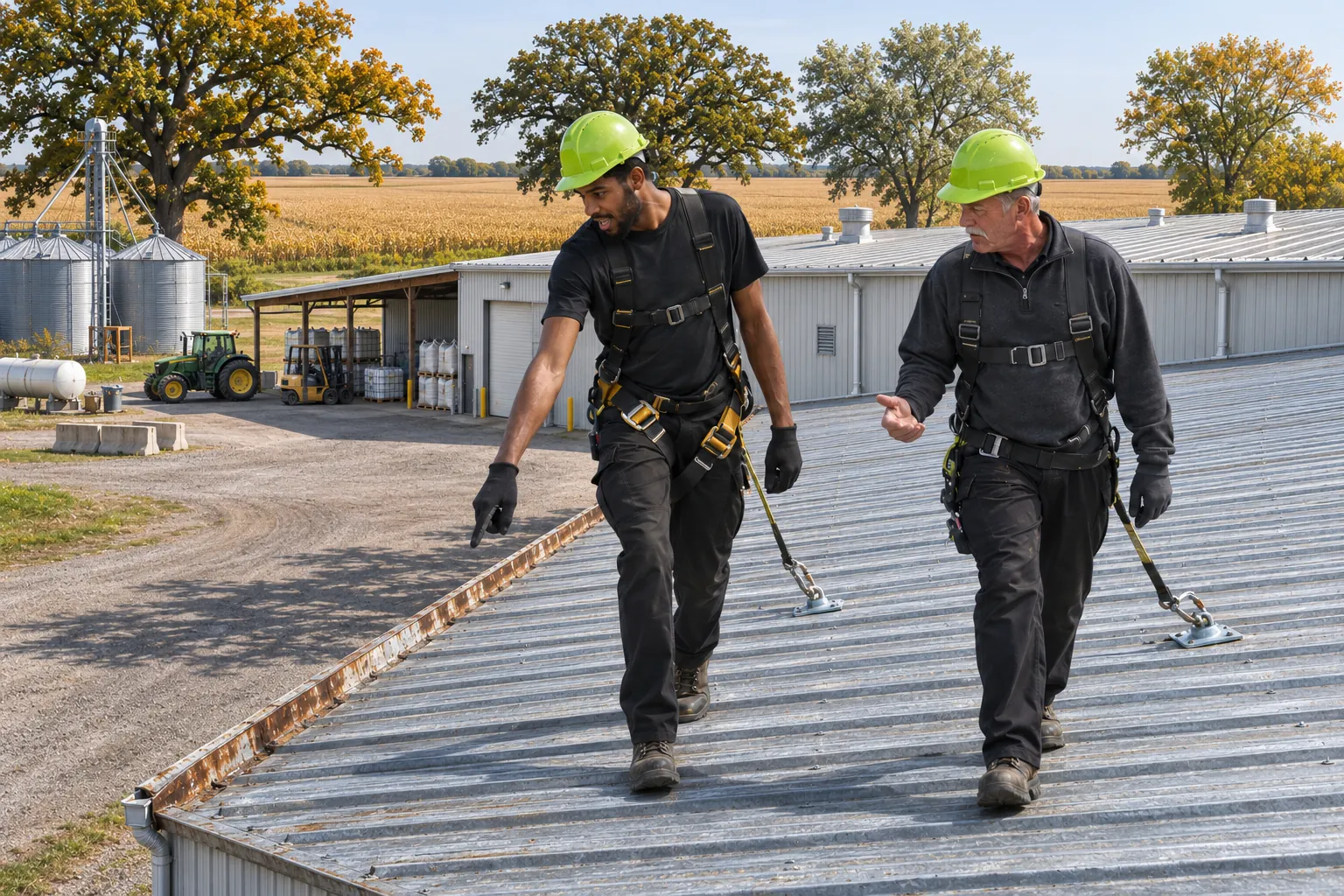
Sound Steel With Local Leaks
- Panels
- Firm underfoot, rust on the surface only
- Screws
- Some backed out or washers cracked
- Laps
- A few end laps opened
- Leak Pattern
- Drips along screw lines or laps
- Where We Start
- New screws, lap sealant, a panel or two
As a Muncie commercial metal roof repair contractor, we replace leaking screws, reseal laps, and swap rusted or hail-split panels on steel business roofs.
A Muncie commercial metal roof repair fits when the steel is still solid. Compare that with a roof where rust has taken over.


Steel roofs leak in a short list of places, and screws top it.
Screws back out and rubber washers crack as panels expand and contract. Freeze-thaw speeds it up, and water follows the shank into the purlin.
Hail splits panels at the ribs, cracks skylights, and breaks vent caps. Shallow dents are mostly cosmetic; punctures and split seams get replaced.
Where one panel overlaps the next, old sealant dries out and the lap lifts, so water blows uphill under it in wind-driven rain.
Water held at panel ends and in gutter lines rusts steel from the edge in, long before the middle of the panel shows wear.
Trim pieces at walls and curbs loosen with movement, and skylight frames crack, leaving gaps the panels themselves never had.
Each fix goes back into the steel roof with matching parts.
Old screws come out, new ones a size larger with fresh washers go in, and each one gets checked to land in the purlin below.
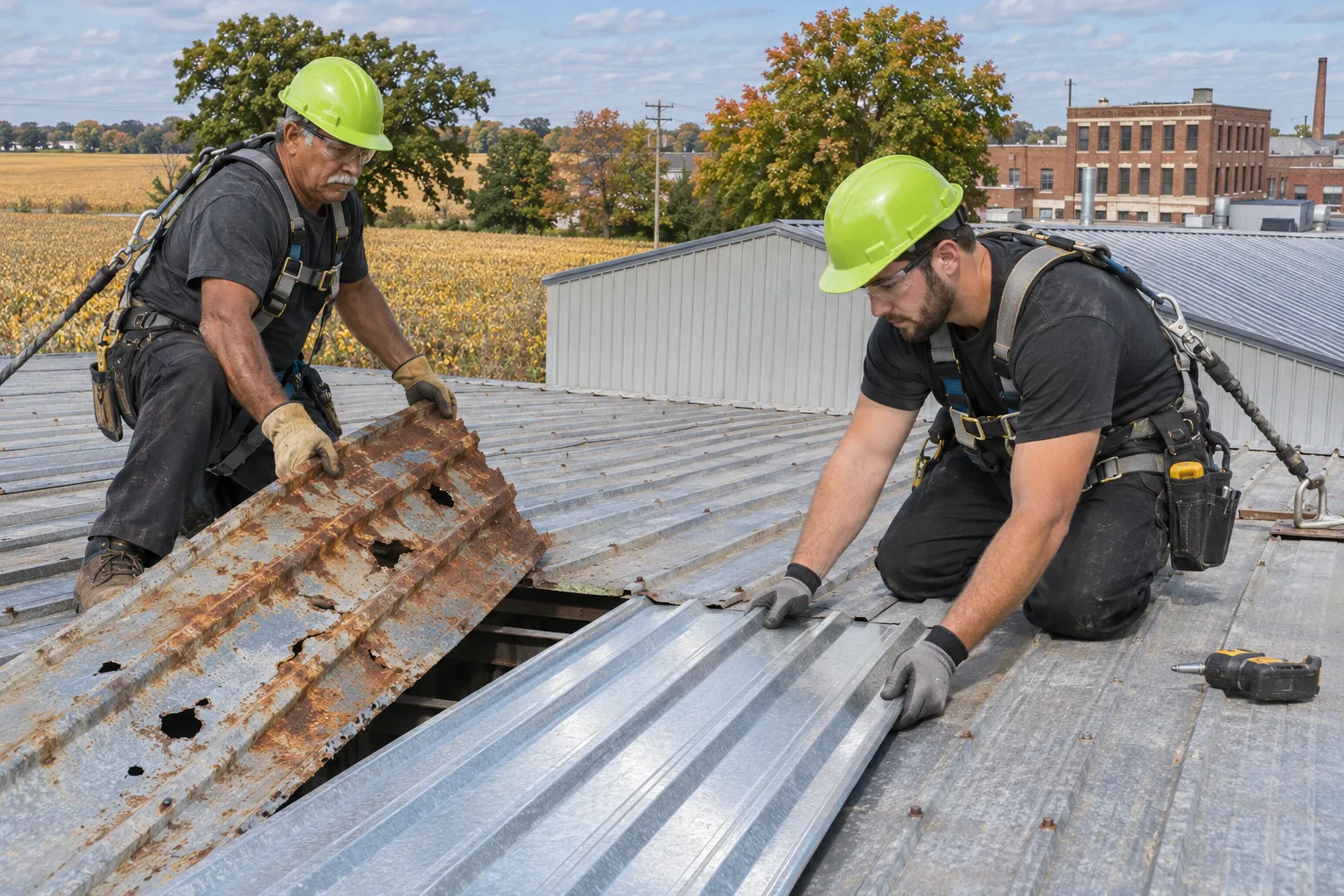
Panels rusted through or thin enough to flex get cut out and replaced with the same profile and gauge, then lapped and sealed.
Laps get cleaned of old sealant, new butyl tape goes in, and stitch screws pull the lap tight again.
Wall trim, curb flashing, and pipe boots get replaced or refastened so the joint sheds water with the panel slope.
Steel roofs cover shops, warehouses, and farm buildings across the area.
Swapping the few rusted panels keeps the sound steel in place and skips a full tear-off.
Oversized screws in the enlarged holes hold tight to the purlin, so the leak stops at the source.
Photos of every split panel and broken vent cap give the owner what an insurance adjuster asks to see.
Call and say which bay it is in. Loose screws and laps get sealed first.
Call UsSend the address. We count the panels and price the swap.
Get A Free EstimateFive decisions, from the first walk to the last screw.
Screw lines, end laps, panel ends, trim, and skylights get walked bay by bay. Underneath, we look for daylight, rust streaks, and wet insulation along the purlins.
Solid steel with loose screws needs new fasteners. Steel rusted through or thin enough to flex needs a new panel cut in to the same profile and gauge.
Split panels, cracked skylights, and broken vent caps after a storm get marked, photographed, and listed separately so the owner can file a claim.
New screws go in a size up with fresh washers, laps get butyl tape and stitch screws, and every fastener gets checked against the purlin line.
Bay numbers, the parts replaced, and photos of each repair go to the owner so the next roof walk starts where this one ended.
Steel roofs often sit next to flat roofs and plant roofs on the same property.

Membrane seams, drains, and ponding on low-slope roofs.
Best For
Drips with no obvious cause, traced to the opening.
Best For
Plant roofs with fans, stacks, and pipe supports.
Best ForScrews, rust, hail, and heat on steel roofs.
We mark split or punctured panels, cracked skylights, broken vent caps, and laps or screws knocked loose, then replace the damaged parts and reseal the loose areas. Shallow dents stay, since they rarely let water in. The inspection photos go to the owner for any insurance claim.
Screws. Washers crack, screws back out, and holes stretch as steel moves with temperature, and freeze-thaw makes it worse every winter. Opened end laps, loose trim at walls and curbs, and rust at panel ends come next.
The old screw comes out and a new one with a fresh washer goes in, usually one size up so it bites into the stretched hole, and the head gets sealed. Holes that missed the purlin get filled and sealed instead of reused.
When rust has eaten holes in it, thinned it until it flexes underfoot, or spread across laps that can no longer seal. Those panels get cut out and replaced in the same profile. Surface rust on solid steel gets cleaned and treated.
Heat bakes the sealant around screw heads and at laps until it cracks, and it loosens trim at walls. A check before fall rain finds that dried sealant while it is still a small repair instead of a winter leak.
Yes. Standing-seam roofs leak at clips, end laps, and trim rather than exposed screws, so repairs there focus on reseaming opened seams, resealing laps, and replacing loose or bent trim at walls and curbs.
Tell us the building, the bay that drips, and whether hail came through. We find the screw, lap, or panel and fix it.