Trouble At Equipment
- Where It Leaks
- Fan curbs, stacks, drains, joints
- Membrane
- Sound away from equipment
- Insulation
- Wet only near the penetrations
- Operations
- Shutdowns can be scheduled
- Where We Start
- Curb by curb, drain by drain
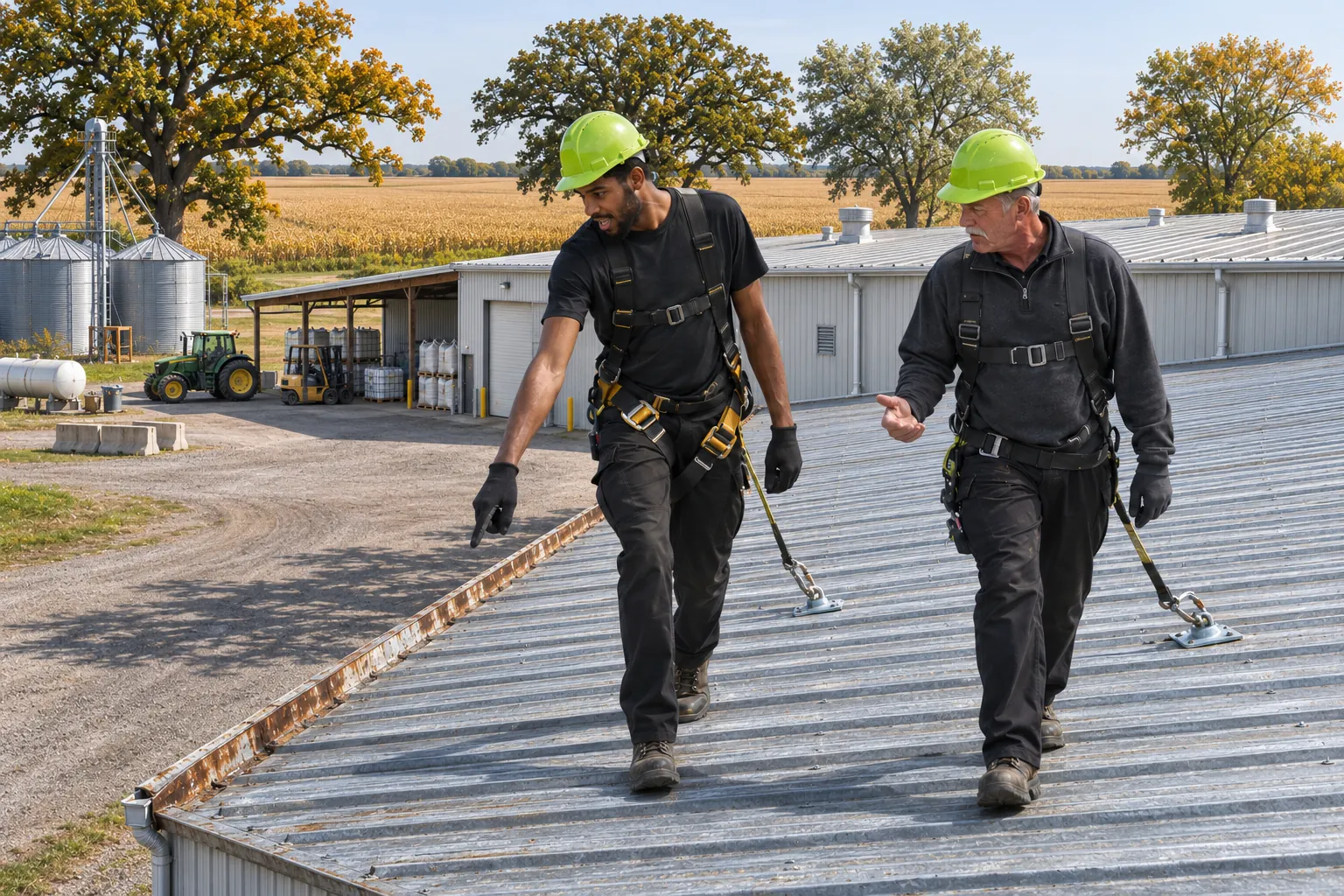
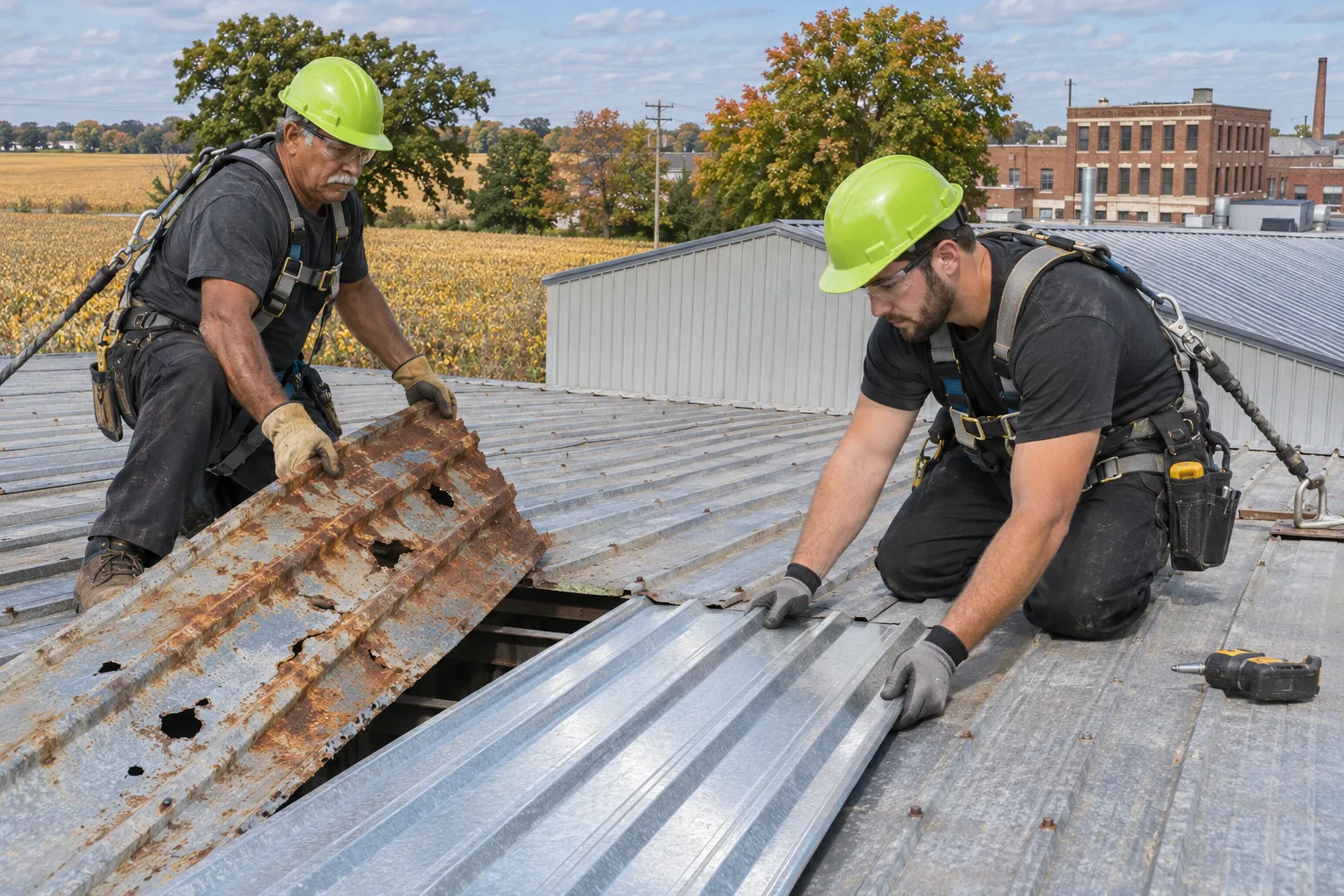
As a Muncie industrial roof repair contractor, we repair drains, fan and stack curbs, expansion joints, and seams on plant roofs, timed around production below.
Muncie industrial roof repair fits plant roofs where trouble gathers around equipment. Compare that with a roof worn out across the field.


Equipment on the roof is where plant roofs usually give out first.
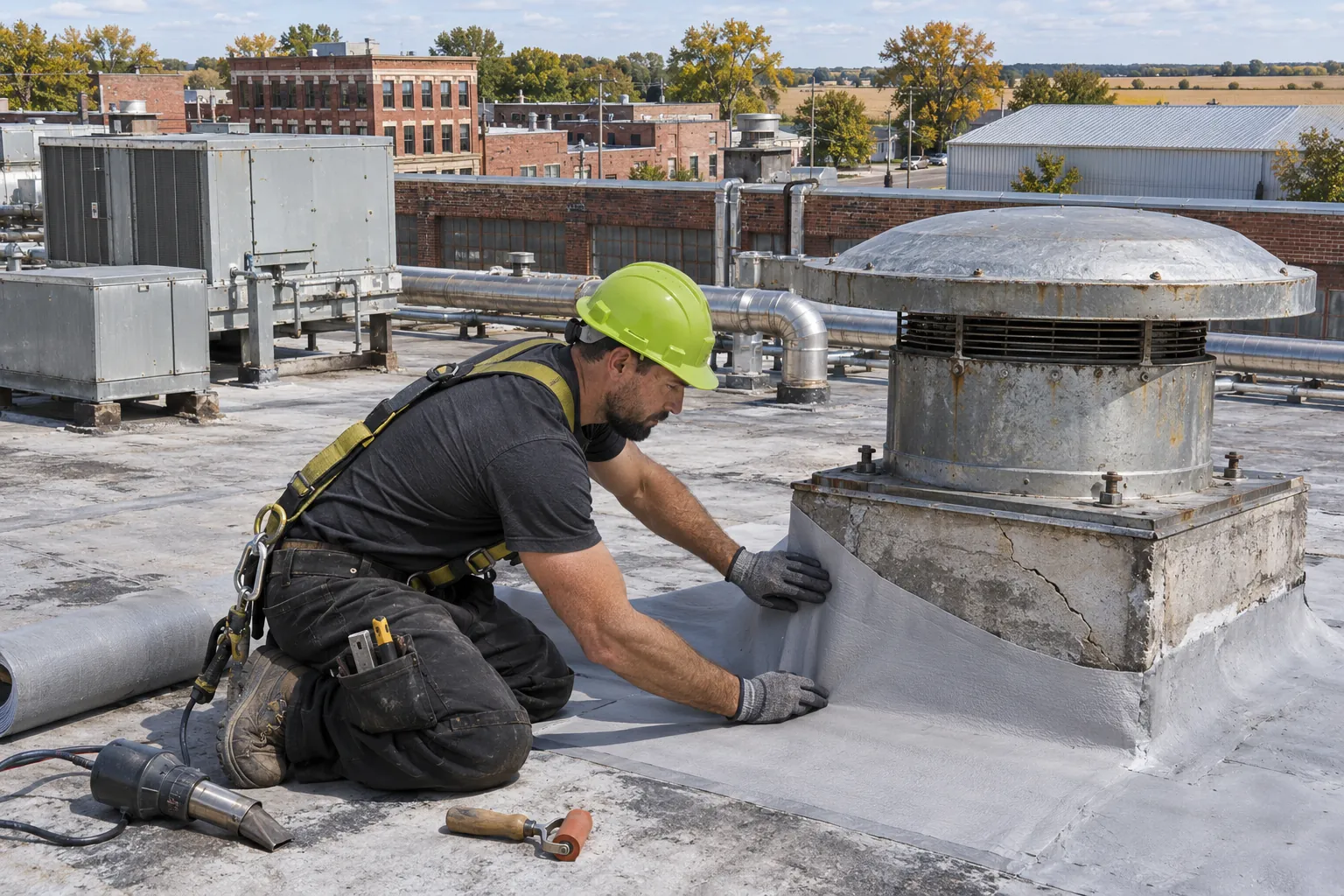
Grease, heat, and residue from exhaust fans soften membrane around the curb, and vibration cracks the flashing corners.
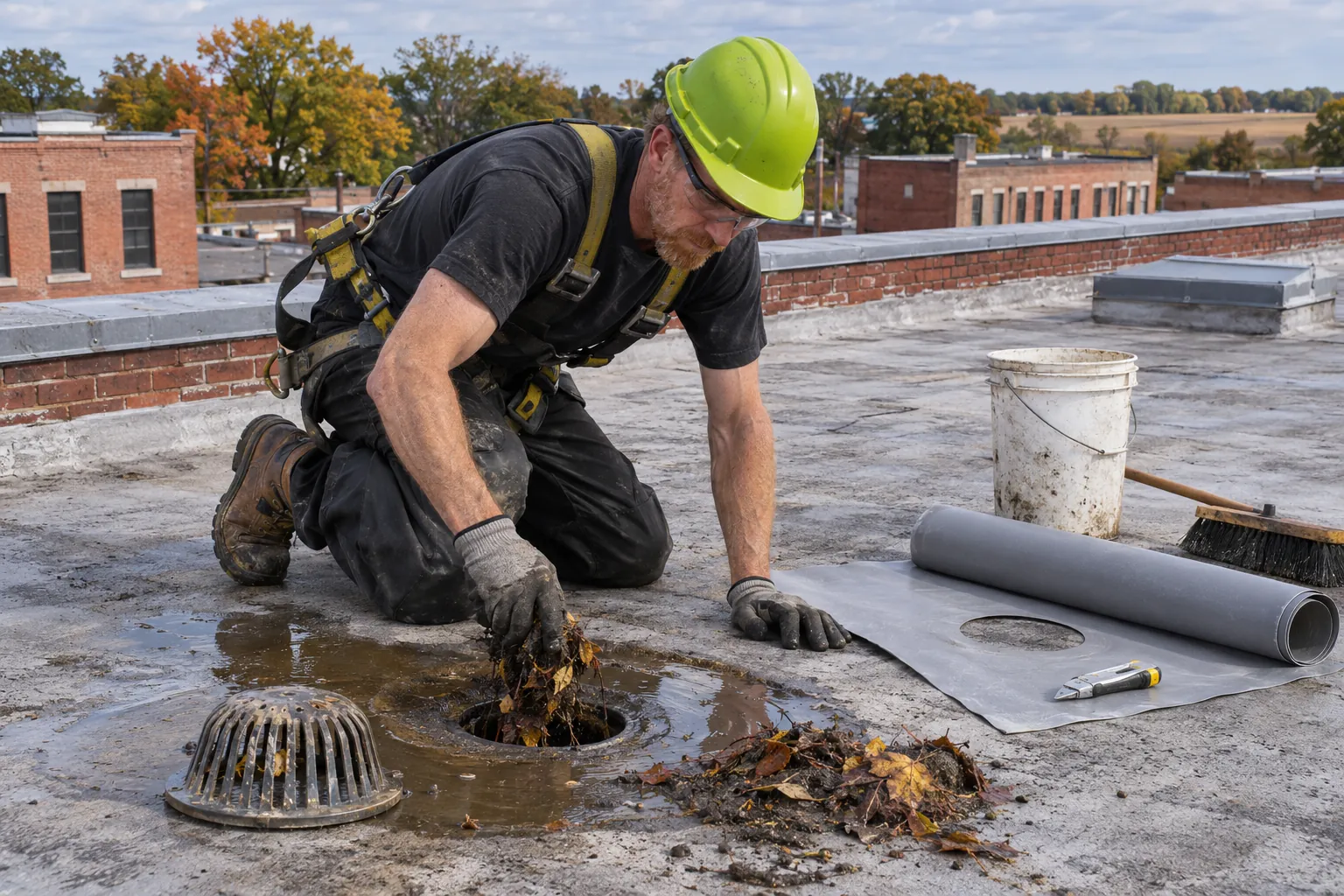
Loose clamping rings and membrane pulled back from the drain flange let water in right where the whole roof sends it.
Plant roofs move between building sections, and the joint covers split or pull loose from the membrane on each side.
Pipe stands and conduit supports sitting on the membrane rub through it, and maintenance foot traffic adds punctures nearby.
Long curbs and duct runs block the roof slope, so rain pools on their uphill side and soaks the seams beside them.
Each repair uses materials that hold up to what the plant puts on its roof.
Cracked or loose curb flashing gets replaced, the fan base gets secured, and a protection layer goes down where residue lands.
Drain parts get reset or replaced, the membrane gets resealed to the flange, and low areas get built up toward the drain.
Worn membrane under supports gets patched, and new pads keep stands from rubbing through again.
Spring and fall walks clear drains, check curbs and seams, reseal metal sections, and pick up debris left by service crews.
Split or loose joint covers between plant sections get replaced and tied into the membrane on both sides.
Plant roofs protect equipment, inventory, and the people working under them.
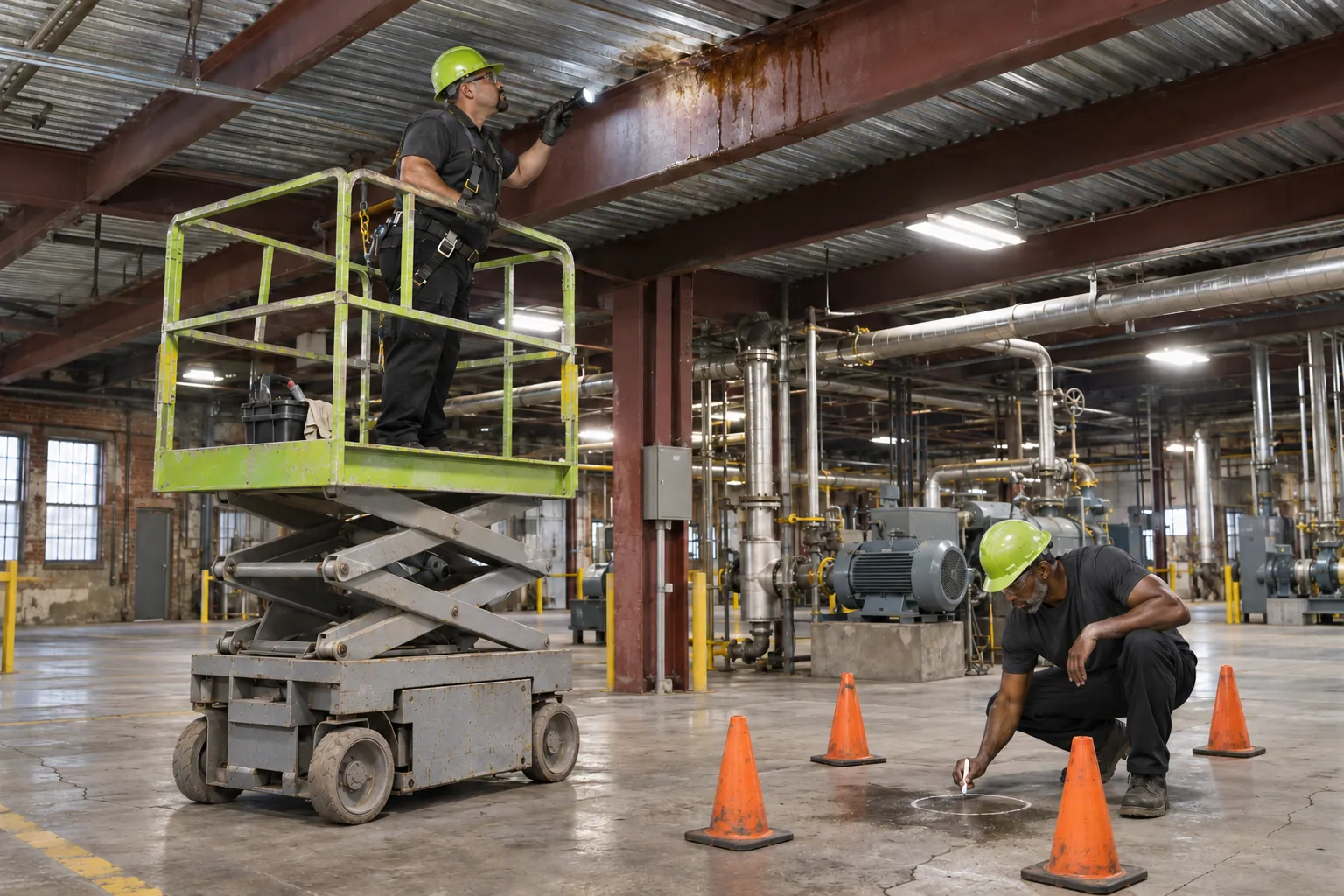
Repairs over working floors get scheduled with the facility manager, and fan shutdowns happen on the plant timetable.
Grease-resistant flashing and protection layers keep fan curbs from softening again.
Each maintenance visit gets recorded, so repeat trouble at one drain or curb shows up fast.
Call with the building and bay. Temporary seals protect the line until a shutdown window.
Call UsSend the plant address. We walk the roof and match repairs to your shifts.
Get A Free EstimateFive decisions made with the facility manager.
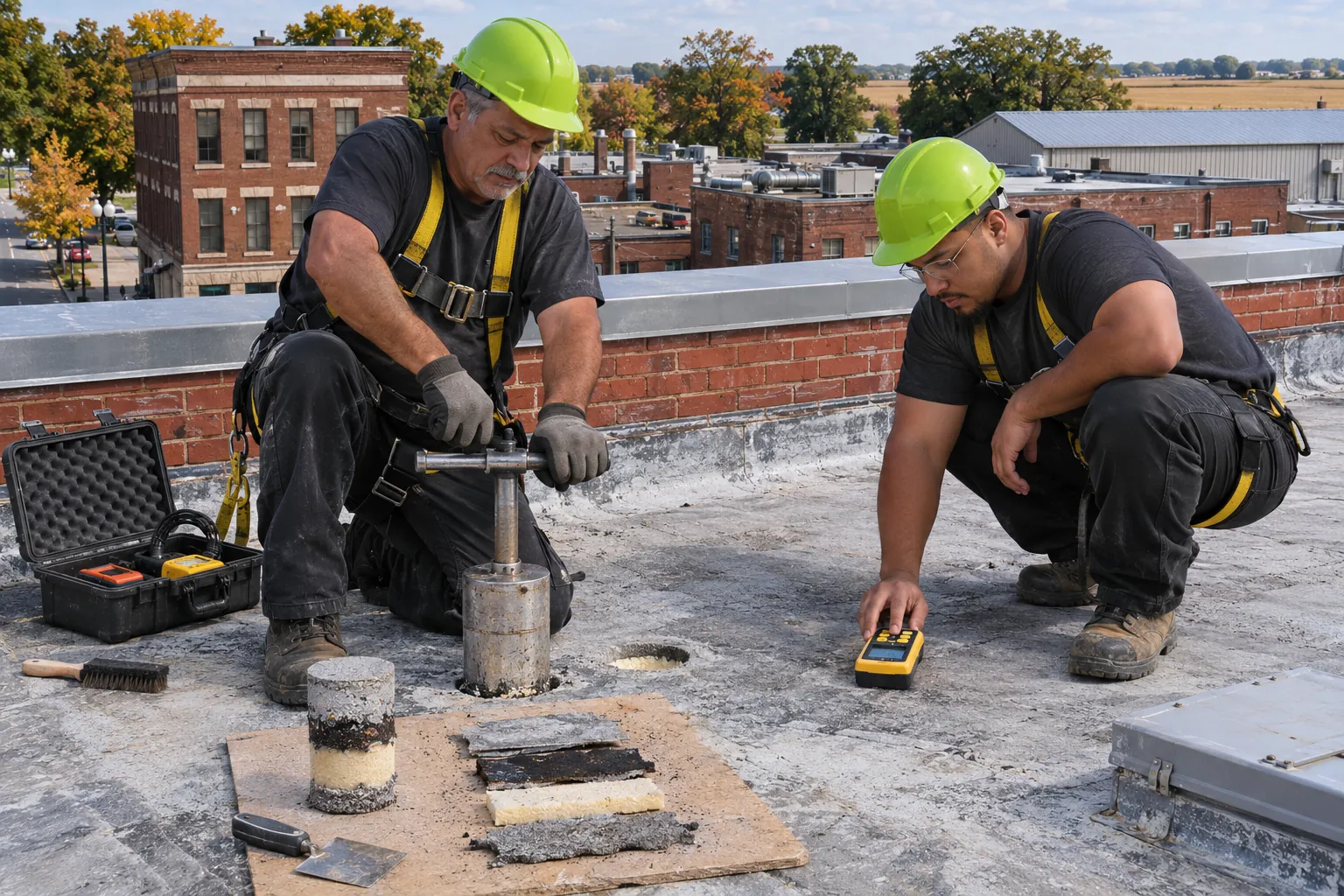
Fan curbs, stacks, pipe supports, expansion joints, and drains get walked first, with the facility manager pointing out where drips land on the floor below.
Some repairs happen beside running fans; others need a short shutdown. That gets settled with the plant before any work goes on the calendar.
Curbs under grease or heat get resistant membrane and protection layers, and drains get new clamping rings and resealed flanges.
Repairs over production areas get timed to shift changes, weekends, or planned downtime, so the floor below keeps running.
Photos, parts used, and notes on each curb and drain go to the facility, so the next maintenance walk knows where to look.
A follow-up walk after the next freeze or summer heat checks each repaired curb, drain, and joint, and catches new wear from equipment and foot traffic early.
Plant sites often add flat office roofs, metal warehouses, and leaks with no obvious source.

Membrane seams, drains, and ponding on low-slope roofs.
Best For
Screws, end laps, and rusted panels on steel roofs.
Best For
Drips with no obvious cause, traced to the opening.
Best ForDrains, exhaust fans, leaks, and upkeep on plant roofs.
Debris comes out, then the drain body, clamping ring, strainer, and membrane seal get checked. Most drain leaks trace to a loose ring or membrane pulled back from the flange, so parts get reset or replaced and low spots built up toward the drain.
The leak gets traced to its source, often an exhaust stack, equipment curb, pipe support, or expansion joint, and repaired with materials suited to the plant. Work over production gets scheduled with the facility manager so operations below continue.
Cleaning the area, replacing cracked or loose curb flashing, securing the fan base, and adding membrane or a protection layer that resists grease, heat, or residue. Raising low curb flashing is often part of it, and fan shutdown gets coordinated with the plant.
Walks in spring and fall and after big storms, clearing drains and gutters, checking seams and flashing at curbs and walls, resealing screws on metal sections, and picking up debris left by service crews. A visit log shows which spots keep coming back.
Yes. Pads along the paths maintenance staff use to reach fans and units spread the load and keep boots and tools off the membrane, which cuts down on punctures near equipment.
The split or loose joint cover gets removed, the edges cleaned, and a new cover installed and tied into the membrane on both sides so the sections can keep moving without opening a gap.
Tell us which curbs, drains, or bays are leaking and when the plant can make room. We plan the repairs around you.