Drains
Drain Leaks Over Production Lines
Loose clamping rings and membrane pulled back at the drain flange put water right over machinery and product.
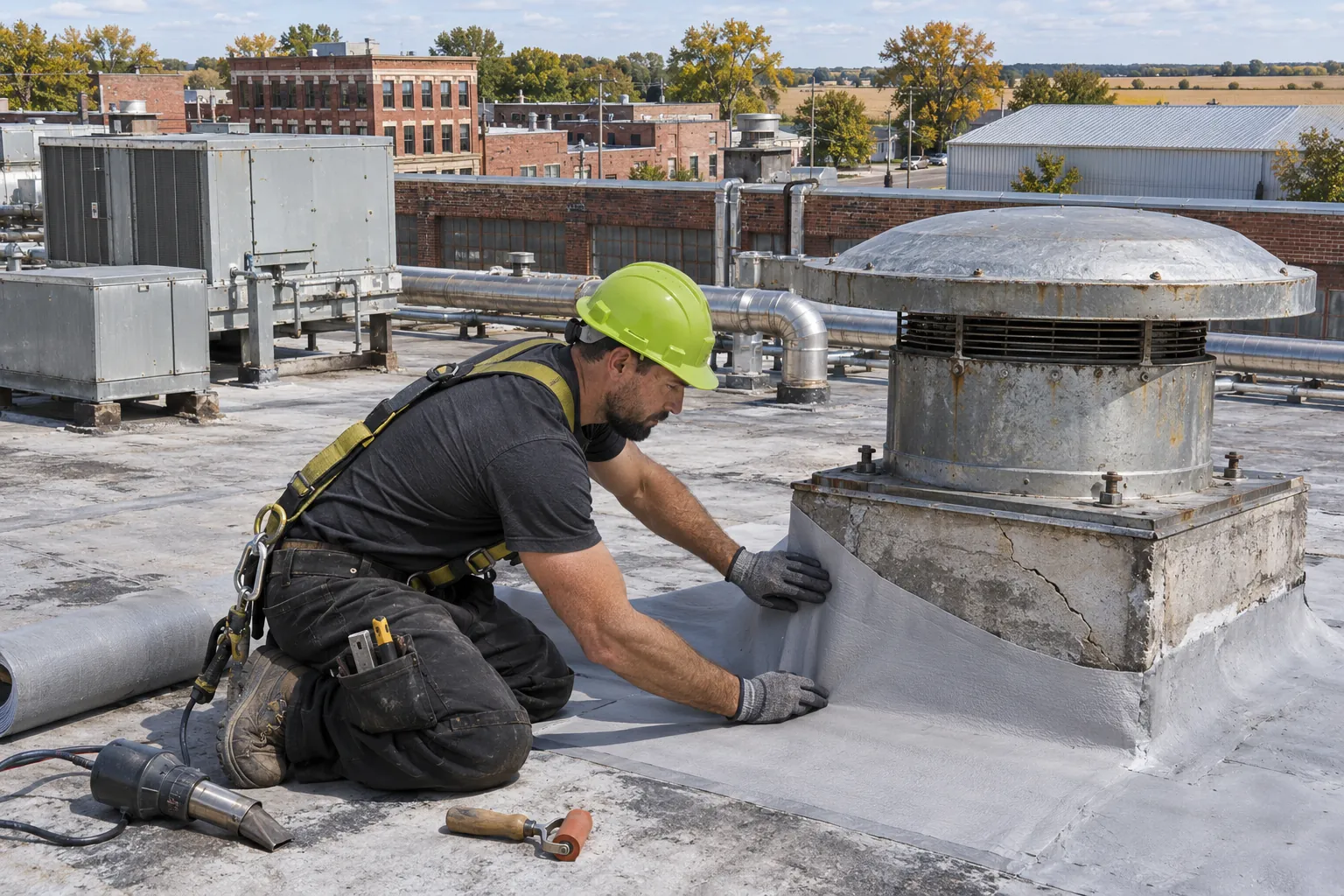
As a Portland commercial roof repair contractor, we repair drains, curb flashing, seams, and screws on industrial roofs in Portland, Indiana, timed around production.
Portland commercial roof repair in town is mostly plant work, where the floor below keeps running while the roof gets fixed.
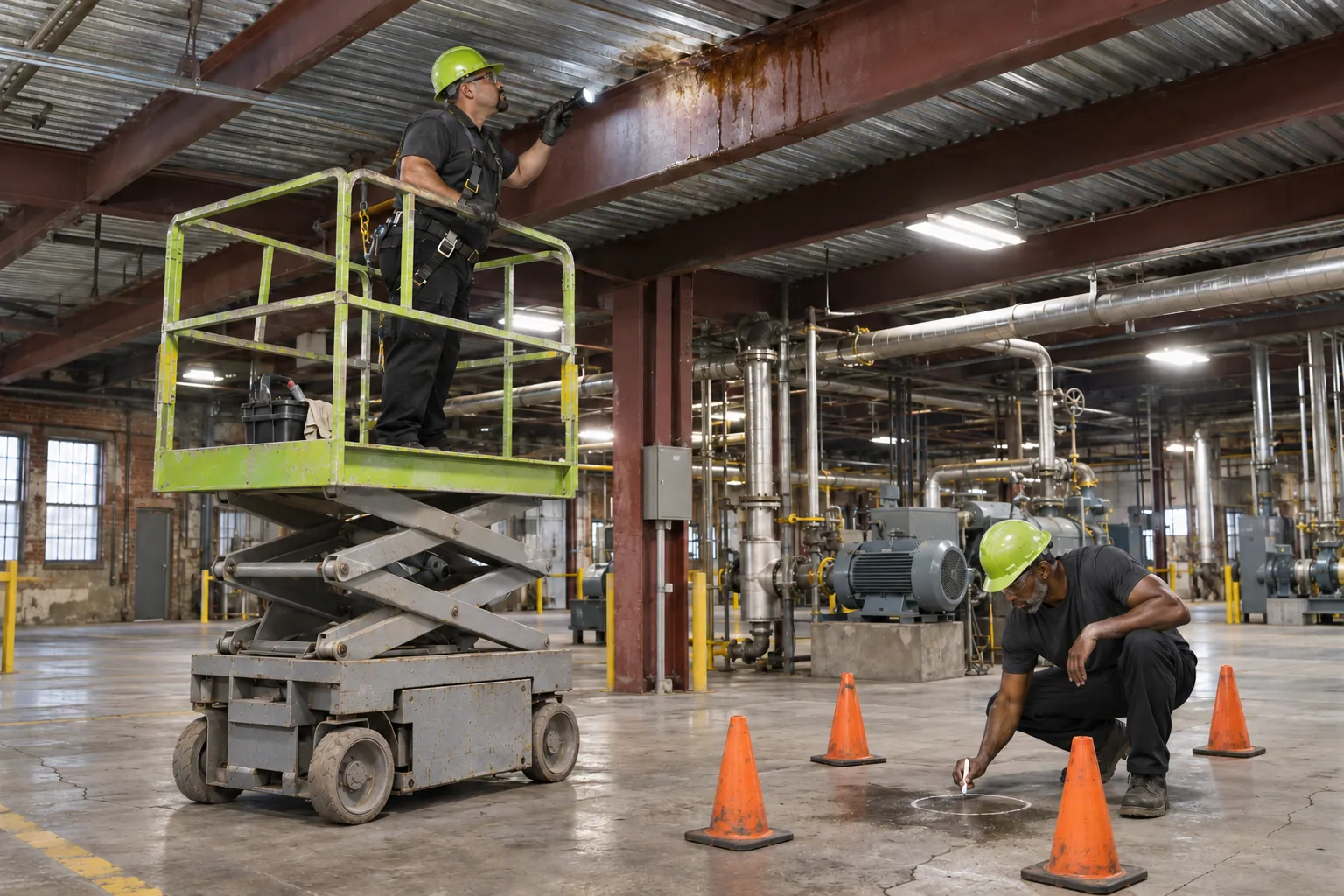
Industrial roofs carry curbs, stacks, and drains, and leaks over a production line cost more than the repair itself. We walk the roof with the facility manager, match drips on the floor to openings above, and plan each repair around shifts and planned downtime.
Every visit ends with a written record of what was fixed and where, kept by the plant for its next maintenance walk and for budget planning.
Plant roofs leak where equipment and water meet.
Loose clamping rings and membrane pulled back at the drain flange put water right over machinery and product.
Vibration from fans and units cracks curb corners, and grease or heat softens the membrane around them.
Big flat roofs move with temperature, and long seams open at low spots where water sits after rain.
Metal-roofed bays on mixed plant roofs leak at backed-out screws and where steel meets the flat roof.
Additions built in different years move apart, and the joint cover between them splits or pulls loose from the membrane.
A dry roof keeps lines, product, and people working.
Repairs fit shift changes, weekends, and downtime, so the line keeps running.
Replacing cracked curb flashing ends the drip that lands on machinery every heavy rain.
Notes and photos for each drain and curb make the next maintenance walk faster.
Repairs suited to plant roofs.
Clamping rings and strainers get reset or replaced and the membrane resealed to the flange.
Cracked flashing gets replaced, raised where it sits low, and protected where grease or residue lands.
Opened seams get cleaned and welded on TPO, or primed and taped on EPDM.
Screws get replaced a size up, and the joint between metal bays and the flat roof gets new flashing.
Low areas behind curbs and near drains get built up with tapered insulation so rain runs to the drain.
Call with the plant and bay. A temporary seal comes first.
Call UsSend the address and your downtime dates. We plan around them.
Get A Free EstimateFive decisions made with the facility manager.
The facility manager shows where drips land on the floor, and the roof walk follows them up to curbs, drains, seams, and metal bays.
Openings over critical lines and stored product go to the top of the list; leaks over storage or empty bays follow.
Quiet repairs happen during shifts; anything needing a fan shutdown or noisy work waits for a change or planned downtime.
Drains get reset, curbs reflashed, seams welded or taped, and screws on metal bays replaced a size up.
A record of each repair with photos, parts used, and the spots to watch goes to the facility for the next walk.
Plants usually set spring and fall roof walks, plus one after big storms, so drains, curbs, and seams near equipment get checked before small wear turns into a leak over the line.
We take commercial roof repair work in Portland, Muncie, and four other towns. Plant somewhere else? Call us or send us a message.
Industrial roofs, cost, and scheduling.
Portland sits inside our service area, and plant roofs there get drain, curb flashing, seam, and screw repairs planned around production, with a clear written record of what was fixed.
The number and size of problem spots, wet insulation, roof height and access, and whether work has to wait for downtime. A free estimate finds the cause, measures the repair, and sets the price in writing.
Ask how they schedule around shifts, which materials they use near grease and heat, and whether you get a written record after each visit. A clear plan for working over production matters as much as the repair.
Some do. Curb work right at a running fan often needs a short shutdown, which gets planned with the facility in advance.
Spring and fall, plus after big storms. Each walk clears drains, checks curbs and seams, and picks up debris left by service crews.
Sections built in different years move on their own, and the joint cover between them splits or pulls loose. A new cover tied into the membrane on both sides stops the leak and lets the sections keep moving.
Curbs and duct runs block the slope, so water collects on their uphill side. Tapered insulation or a cricket sends it around the equipment toward a drain.
Yes. Photos, parts used, and notes on each curb and drain go wherever the plant wants them, so maintenance staff can track repeat trouble spots.
They can. Stands sitting right on the membrane rub through as pipes move and vibrate. The worn spots get patched and new pads go under each stand.
Tell us where drips hit the floor and when the plant can make room. We plan the repair around you.