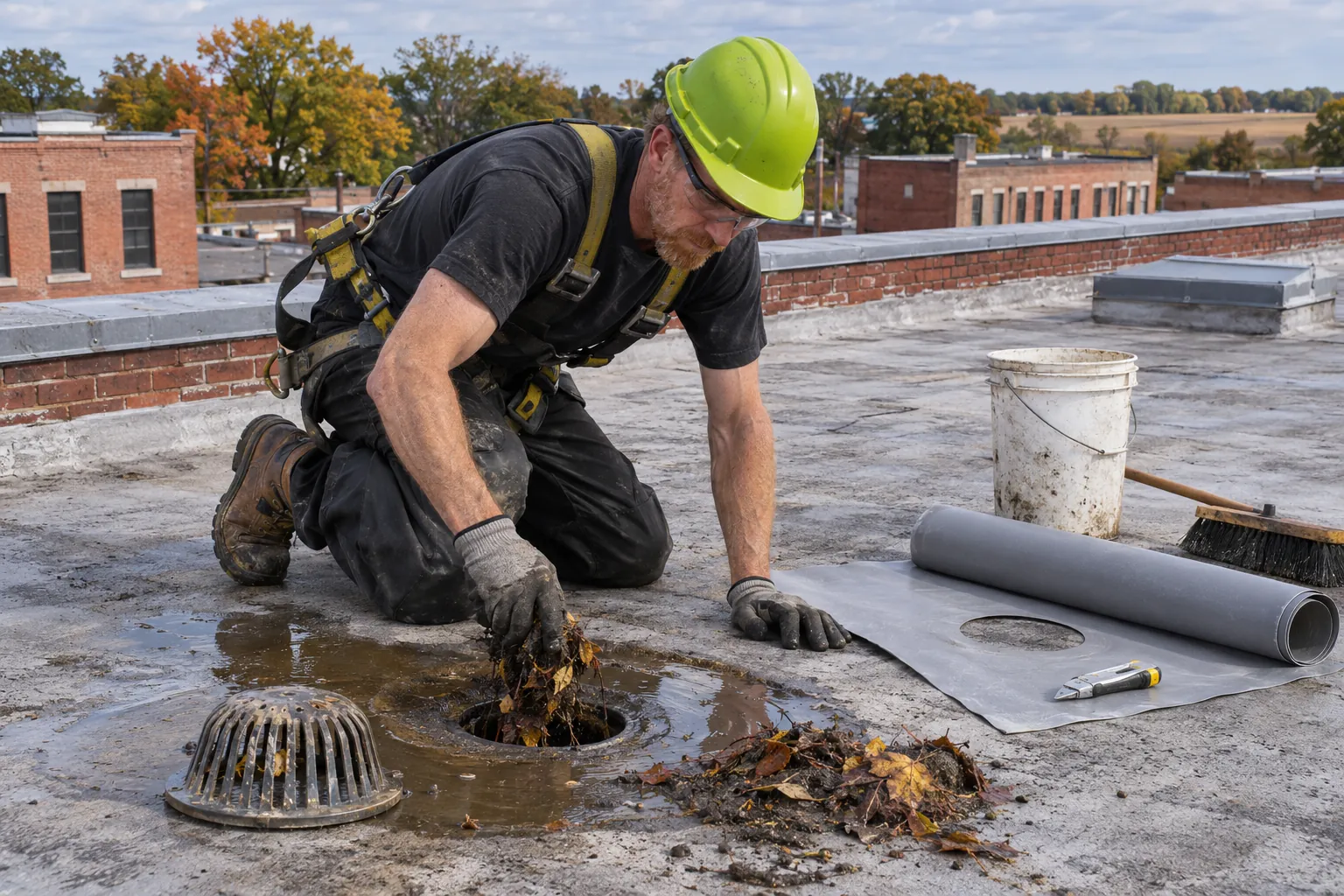
Flat Roof Repair
Membrane seams, drains, and ponding on low-slope roofs.
Best For- TPO, EPDM, and built-up roofs
- Ponding at drains and low spots
- Blisters and opened laps
We offer commercial roof repair services in Muncie for flat roofs, metal roofs, active leaks, and industrial roofs, each matched to the system already on the building.
Pick the commercial roof repair services in Muncie that match what is leaking: membrane, steel panels, a single drip, or a plant roof full of equipment.
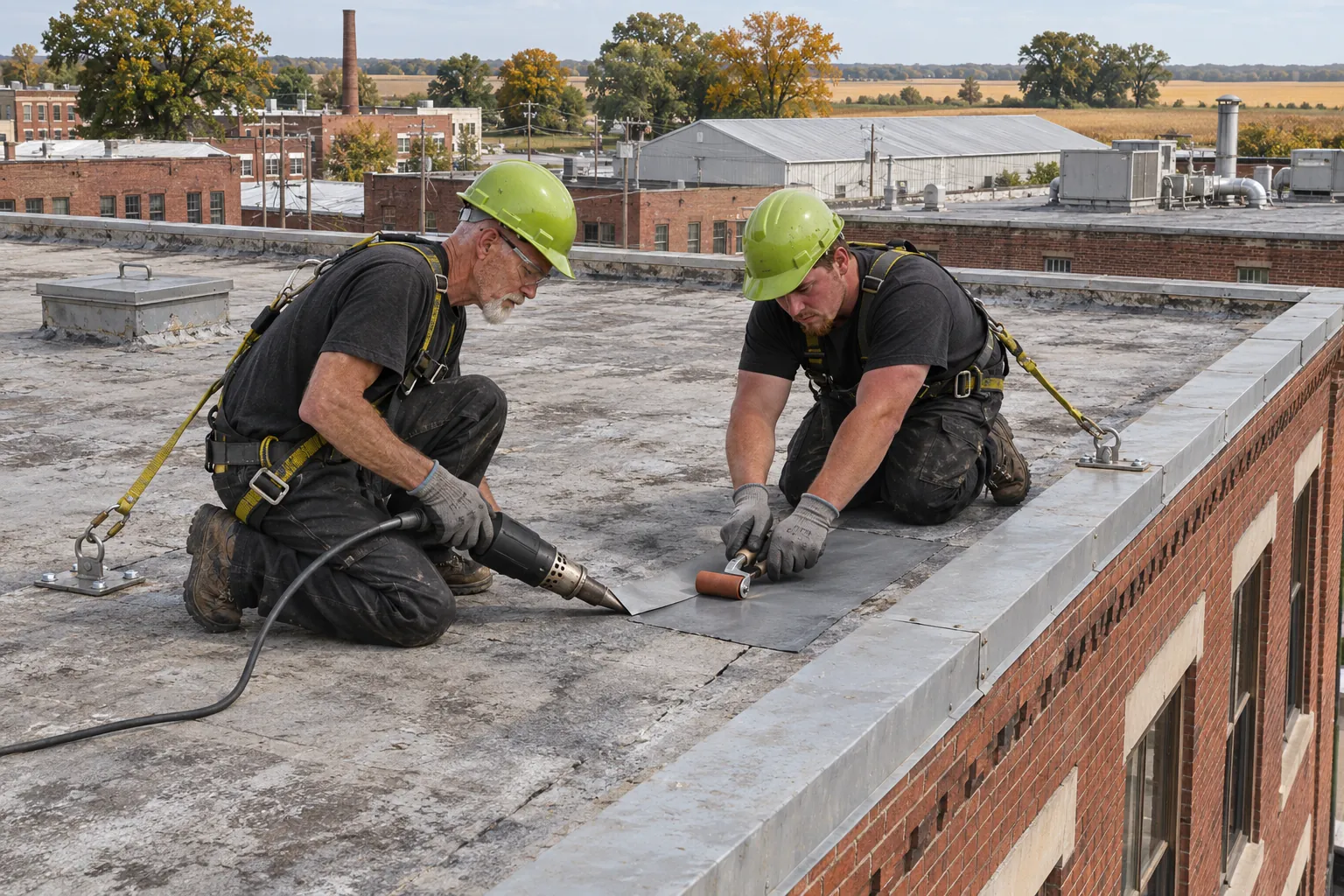
Membrane seams, drains, and ponding on low-slope roofs.
Best For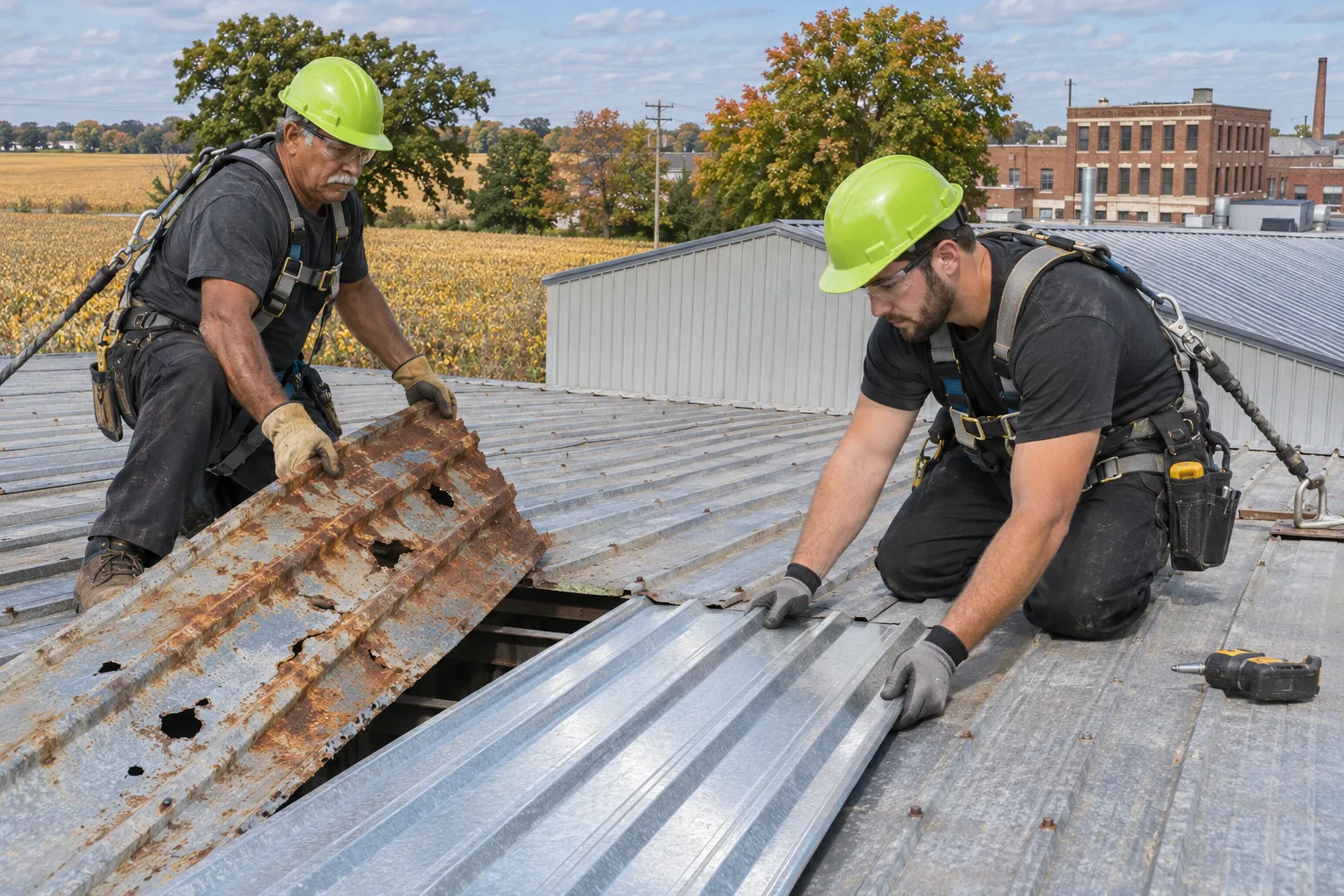
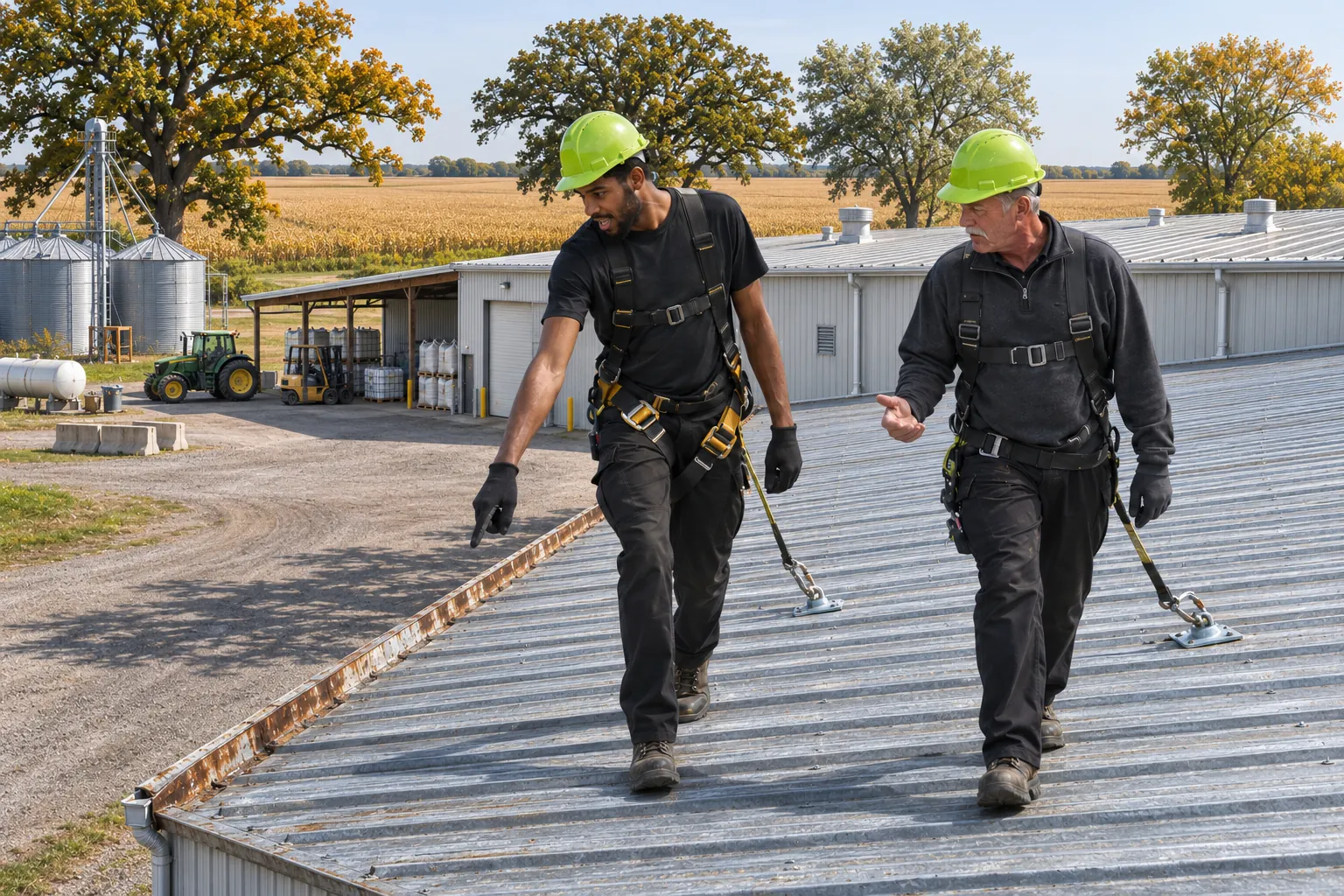
Screws, end laps, and rusted panels on steel roofs.
Best For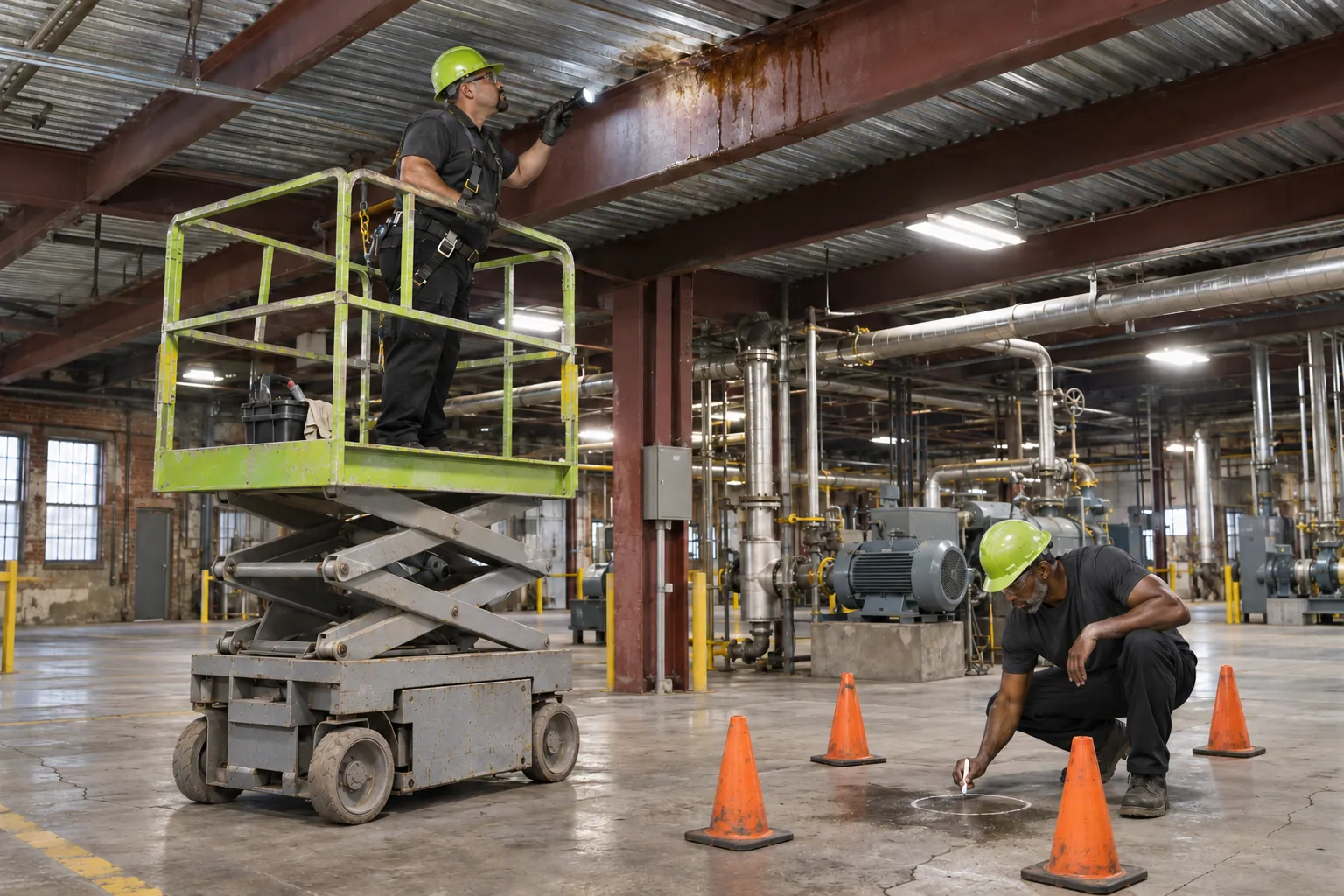
Drips with no obvious cause, traced to the opening.
Best For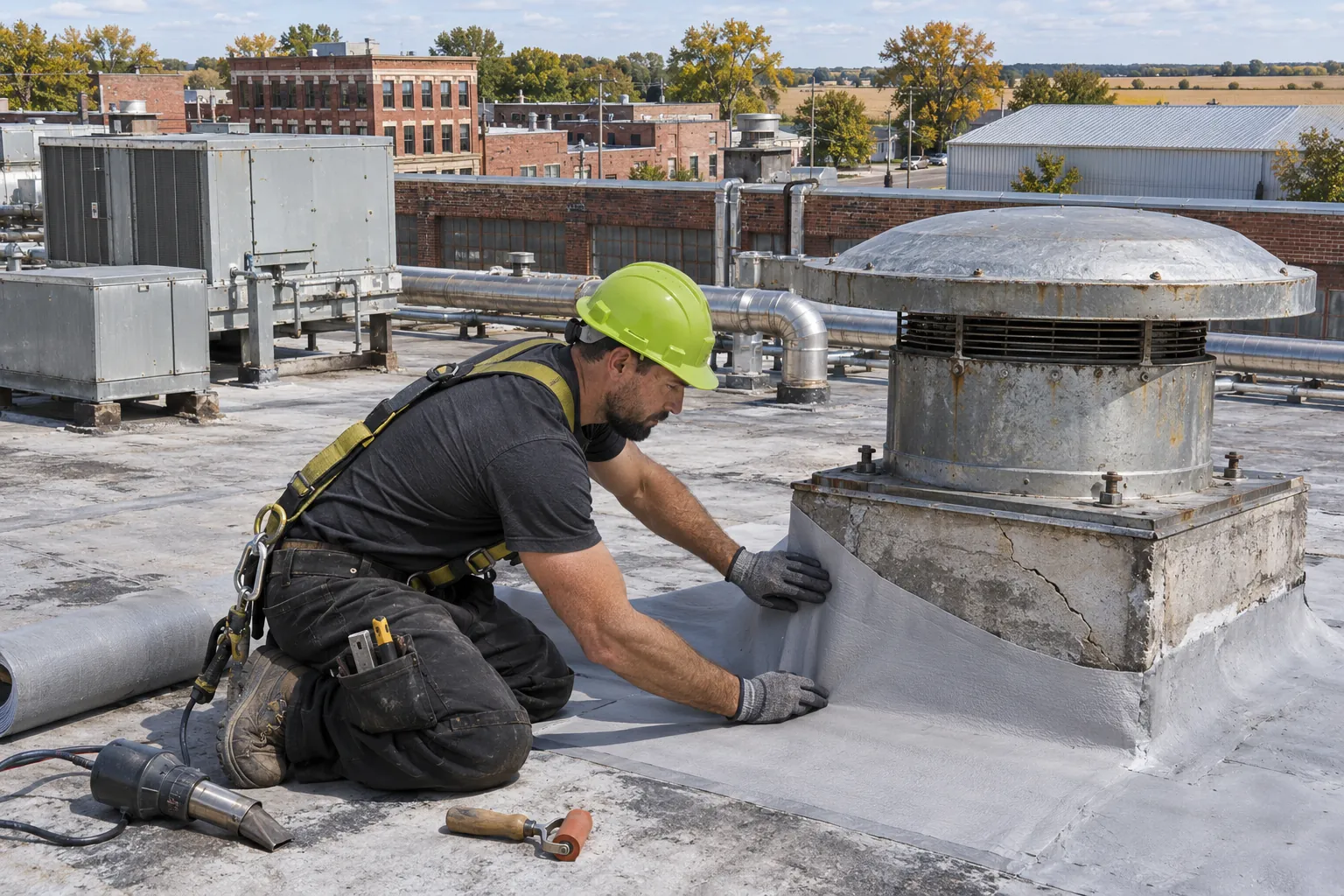
Plant roofs with fans, stacks, and pipe supports.
Best ForWinter leaks often get a temporary seal first. Here is how that compares with the permanent repair that follows it.
Call and describe where the water lands. A temporary seal comes first when the roof is wet.
Call UsSend the address and the roof type. We confirm the repair on the roof and write it up.
Get A Free EstimateEvery service follows the same decisions, whatever roof it lands on.
Drains, curbs, seams, laps, and screw lines get walked before any service is picked. The roof type and the spot where water gets in decide which of the four repairs applies.
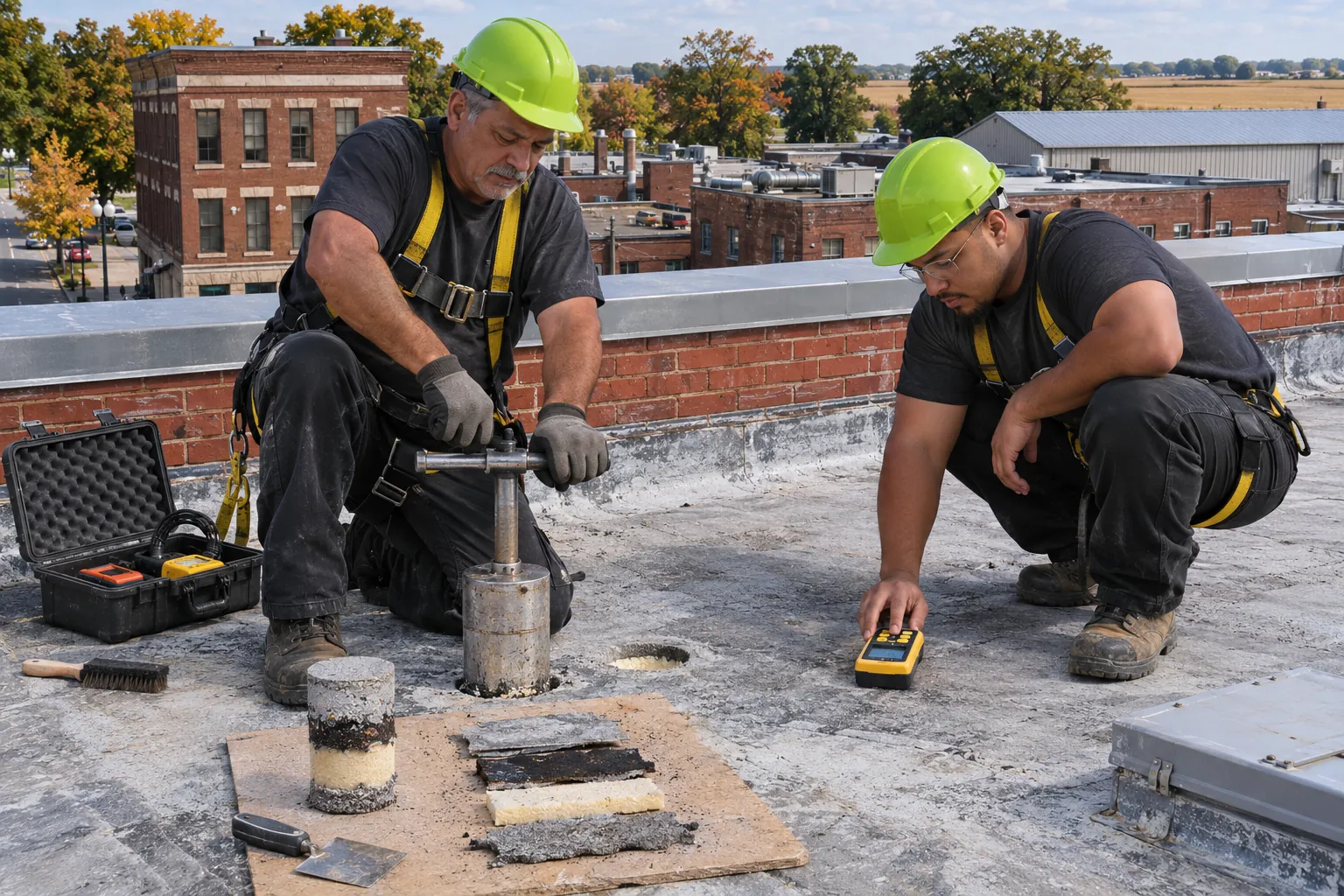
Meter readings around each problem, plus a core where the readings run high, tell us whether a patch will hold or a section needs rebuilding down to the deck.
Membrane problems go to flat roof repair, panel and screw problems to metal roof repair, unknown drips to leak tracing, and fan curbs and process stacks to industrial repair.
Dry days suit welded seams and adhesives. Cold or wet weeks get a temporary seal, then the permanent repair goes on the calendar with the owner.
Before and after photos, the products used, and a note on each weak spot left for later go to the owner after every service visit.
The next heavy rain is the test. If a stain comes back, the return visit starts at the repaired seam, screw, or curb and works outward from there.
How the four services split up and what each one covers.
Start with the roof surface. Membrane on a low slope points to flat roof repair, steel panels to metal roof repair, and a drip with no obvious cause to leak repair. Plants with exhaust fans, stacks, and pipe racks on the roof fall under industrial roof repair.
Plenty of Muncie buildings do, often a metal warehouse beside a flat-roofed office. Each section gets the repair that fits its own surface, and the joint where the two roofs meet gets its own flashing check because water often gets in right there.
Opened TPO seams get cleaned and heat-welded with new membrane, and EPDM seams get cleaned, primed, and covered with seam tape or an adhered patch. Caulk smeared over an open seam does not count as a repair on our roofs.
Yes, when the panels around it are sound. The bad panel comes out, a new one in the same profile and gauge goes in, and the laps on both sides get fresh sealant and screws that land in the purlin.
Plant roofs carry fans, stacks, pipe supports, and expansion joints, and they get more foot traffic from maintenance staff. Repairs there use materials that hold up to grease, heat, and residue, and shutdowns for fans or equipment get planned with the facility.
Every visit ends with photos of the repaired spots, the materials used, and notes on any other weak areas found on the roof. Owners use that record to plan budgets and to show the next roofer what has already been fixed.
It is. We walk the roof, find the cause, measure the repair, and put the price in writing at no charge. Nothing starts until the owner agrees to the written scope.
Small repairs are a big part of the work. A cracked pipe boot, one opened seam, or a few loose screws get the same roof walk and written scope as a large job, and the check around the spot often finds the next problem before it leaks.
Our work here is repair: welding and taping membrane, replacing screws and panels, and fixing flashing and drains. If a roof is a candidate for a coating instead, we say so on the roof walk so the owner can weigh it.
Ladders go up where they clear entrances and dock lanes, and heavier material comes up by hoist or lift when the roof is tall. Access needs get settled with the owner before the work date, so nothing blocks the building.
Some manufacturer warranties require approved materials or an approved installer for repairs. Bring the warranty paperwork to the roof walk, and the repair gets planned so it lines up with what the warranty asks for.
Tell us which roof is leaking and where water shows up inside. We match the repair to the roof and write it down first.